Saturday, 28 November, at 8 pm, a concert dedicated to lesser-known works by Wolfgang Amadeus Mozart with Christophe Rousset
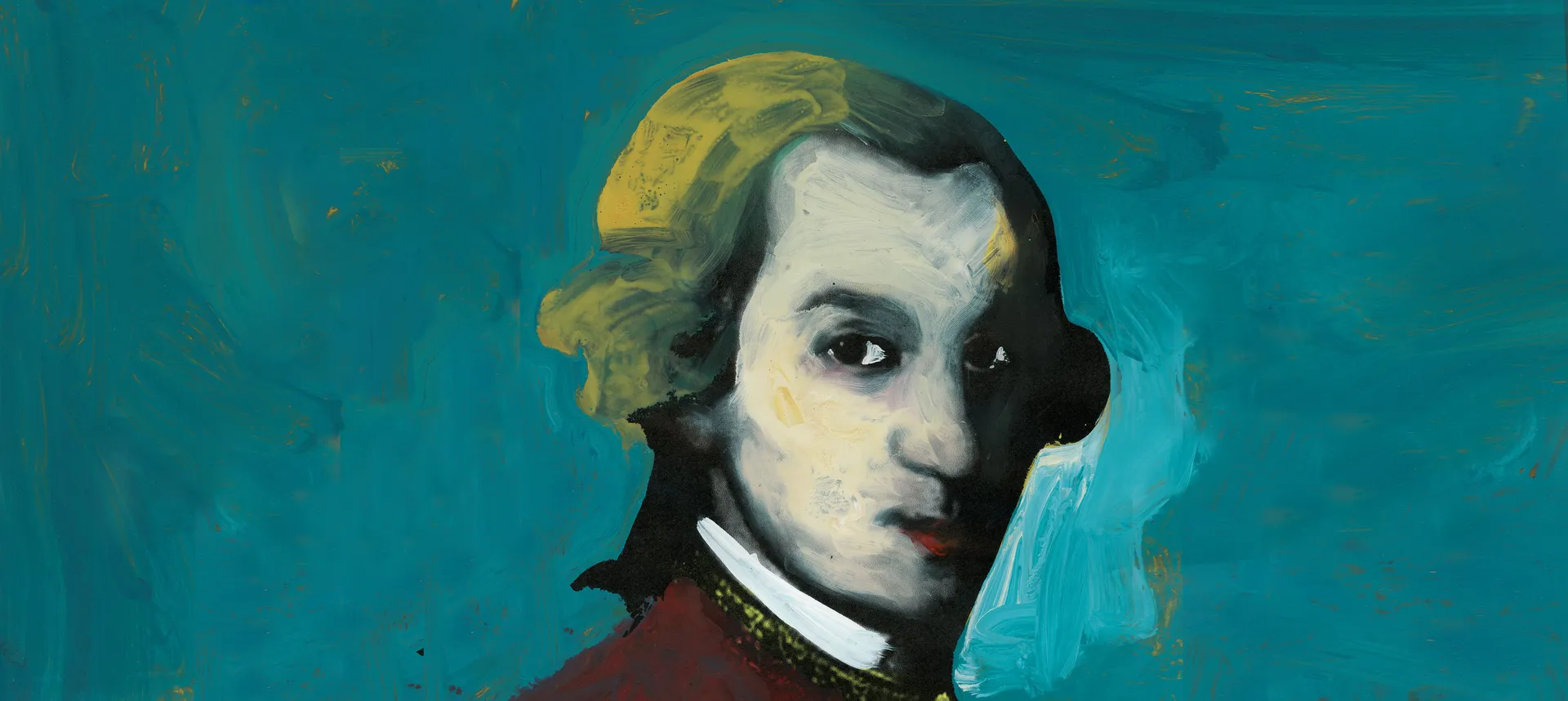
Saturday, 28 November, at 8 pm, a concert dedicated to lesser-known works by Wolfgang Amadeus Mozart
On the podium of the Maggio Orchestra, Maestro Christophe Rousset.
Joining him will be soprano Marie-Eve Munger, mezzo-soprano Beth Taylor, tenor Sebastian Kohlhepp, bass Luca Tittoto and, on double bass, Riccardo Donati.
The programme features numerous rarely performed overtures and concert arias by the genius of Salzburg.
The concert will be broadcast on a delayed basis on Rai Radio 3.
Florence, 25 November 2026 – On Saturday, 28 November, at 8 pm, in the Sala Mehta of the Teatro del Maggio, Maestro Christophe Rousset will take the podium of the Orchestra del Maggio Musicale Fiorentino for the concert Rarità mozartiane (Mozart Rarities), an event entirely dedicated to lesser-known works from Wolfgang Amadeus Mozart's catalogue, including operatic overtures and concert arias.
Christophe Rousset, who has long been committed to rediscovering and promoting eighteenth-century repertoire, highlighted the distinctive features of the evening's programme in his statement for the programme booklet. The concert also marks his debut on the podium of the Teatro del Maggio:
“The programme brings together pieces that are rarely, or have never been, performed in concert form: some date from Mozart's youth, others from his full artistic maturity. Most of the concert arias were written specifically for individual singers who wished to showcase their expressive or virtuoso abilities within operas by other composers, often regarded as ‘minor’ figures. In short, these are veritable scenes: an accompanied recitative followed by an aria. In the eighteenth century, indeed, arias were among the moments most appreciated by opera audiences, and Mozart devoted particular care to them, with striking dramatic contrasts, masterful use of the woodwind instruments and tense harmonies that bring out every shade of meaning in a text (often drawn from serious operas).”
Maestro Rousset studied harpsichord at the Schola Cantorum in Paris and, in 1991, founded his own ensemble, Les Talens Lyriques. He is now regularly invited to perform with Les Talens Lyriques at Europe's most prestigious opera houses and concert venues, including the Opéra National de Paris, the Opéra-Comique, the Concertgebouw Amsterdam, the Theater an der Wien, the Vienna State Opera and Teatro alla Scala. Alongside his conducting career, he also performs as a harpsichordist and chamber musician. His recordings of harpsichord works by Louis and François Couperin, Rameau, D'Anglebert, Royer, Duphly, Forqueray, Balbastre and Scarlatti, as well as his numerous recordings devoted to the works of J.S. Bach, are considered authoritative reference recordings.
Four singers will bring the works on the programme to life: soprano Marie-Eve Munger, mezzo-soprano Beth Taylor, tenor Sebastian Kohlhepp and bass Luca Tittoto.
Joining them, on double bass, will be Riccardo Donati, principal double bass of the Orchestra del Maggio, who will perform a solo part in Per questa bella mano K. 612.
The concert offers a journey of discovery into a ‘different’ Mozart, beyond his best-known operas and great symphonic works. The evening opens with the overture to La finta giardiniera, followed, in order, by Misero! O sogno… Aure che intorno spiri K. 431 for tenor and orchestra; Alcandro lo confesso… Non so d'onde viene K. 512 for bass and orchestra; the overture to L'oca del Cairo, followed by Ah! Lo previdi… Deh non varcar K. 272 for soprano and orchestra; Io ti lascio, o cara K. 245a for mezzo-soprano and orchestra; and the overture to Der Schauspieldirektor. The programme continues with Vorrei spiegarvi, oh Dio K. 418 for soprano and orchestra; Ombra felice… Io ti lascio K. 255 for mezzo-soprano and orchestra, followed by Va dal furor portata K. 21 for tenor and orchestra and the overture to La clemenza di Tito. The concert concludes with Per questa bella mano K. 612 for bass, obbligato double bass and orchestra, and Ah se in ciel benigne stelle K. 538 for soprano and orchestra.
The concert
Mozart's theatrical universe is not confined to his great operatic masterpieces but finds a natural extension in the numerous concert arias that span the entire course of the Salzburg composer's life. Often written for celebrated singers of the time, intended to be inserted into operas by other composers or performed at private musical gatherings, these works represent a veritable dramatic laboratory in which Mozart was able to experiment with daring and refined vocal and instrumental writing.
The first example of the genre dates back to 1765, when Mozart, aged just nine, ventured into his first theatrical composition, setting a text by Metastasio in Va, dal furor portata K. 21. This aria, which faithfully follows the expressive conventions of Italian opera seria, was written to be inserted into a pasticcio scheduled for performance at London's King's Theatre. It belonged to a group of Italian arias composed in the British capital that have since been lost.
Ombra felice… Io ti lascio K. 255, on the other hand, is a substitute aria for Michele Mortellari's opera Arsace, written in 1776 for the castrato Francesco Fortini. In this work, the pain of separation experienced by the protagonist is expressed through a noble melody set against a gentle orchestral accompaniment.
Also tragic in character is Ah! Lo previdi… Deh non varcar K. 272, composed in Salzburg in 1777 for Josepha Duschek, a soprano renowned for her extraordinary vocal abilities and a friend of the composer. It is a great dramatic scene in which the protagonist swings between delirium and resignation, ultimately releasing her anguish in an aria of deeply moving lyricism.
Another celebrated recipient of Mozart's arias was the composer's sister-in-law, Aloysia Weber. For her, in June 1783, Mozart composed Vorrei spiegarvi, oh Dio! K. 418, an aria of extraordinary technical difficulty in which the female voice engages in a dialogue with the oboe, rich in soaring virtuoso passages.
Dating from the same period is Misero! O sogno… Aure che intorno spiri K. 431, a composition written at the request of Valentin Adamberger, a celebrated tenor, a friend of Mozart and performer in several of his operas. The extensive opening accompanied recitative emphasises the protagonist's inner torment, which then gives way to a deeply expressive vocal line supported by refined orchestration.
Alcandro lo confesso… Non so donde viene K. 512 (1787) also displays the typical characteristics of opera seria. Written specifically for the bass Ludwig Fischer to a text by Metastasio, it is an aria in which a father's distress in the face of the unknown is conveyed through noble and expressive vocal writing.
Another aria intended for Aloysia Weber is Ah se in ciel, benigne stelle K. 538. Composed in Vienna in 1788, it belongs to a group of substitute arias that Mozart wrote during his Viennese years as tributes to his singer friends. It is a typical bravura aria, dominated by vocal agility and coloratura passages.
Io ti lascio o cara, addio dates from 1791. Composed before Mozart's departure for Prague to oversee the performance of La clemenza di Tito, the aria was, rather unusually, not entered in the composer's personal catalogue. Nor is it known who the female friend was to whom this farewell was addressed.
Another precious vocal work in Mozart's catalogue also dates from the composer's final year: Per questa bella mano K. 612, composed for the bass Franz Xavier Gerl. This is a unique work in which the voices of bass and obbligato double bass come together in an affectionate and, at the same time, ironic declaration of love.
Framing this collection of concert arias are also several rarely performed Mozart overtures: from the youthful and brilliant overture to La finta giardiniera (1775), through L'oca del Cairo (1783) and Der Schauspieldirektor (1786), to the neoclassical solemnity of La clemenza di Tito (1791).