Zubin Mehta conducts Ludwig van Beethoven’s Ninth Symphony on the occasion of his 90th birthday
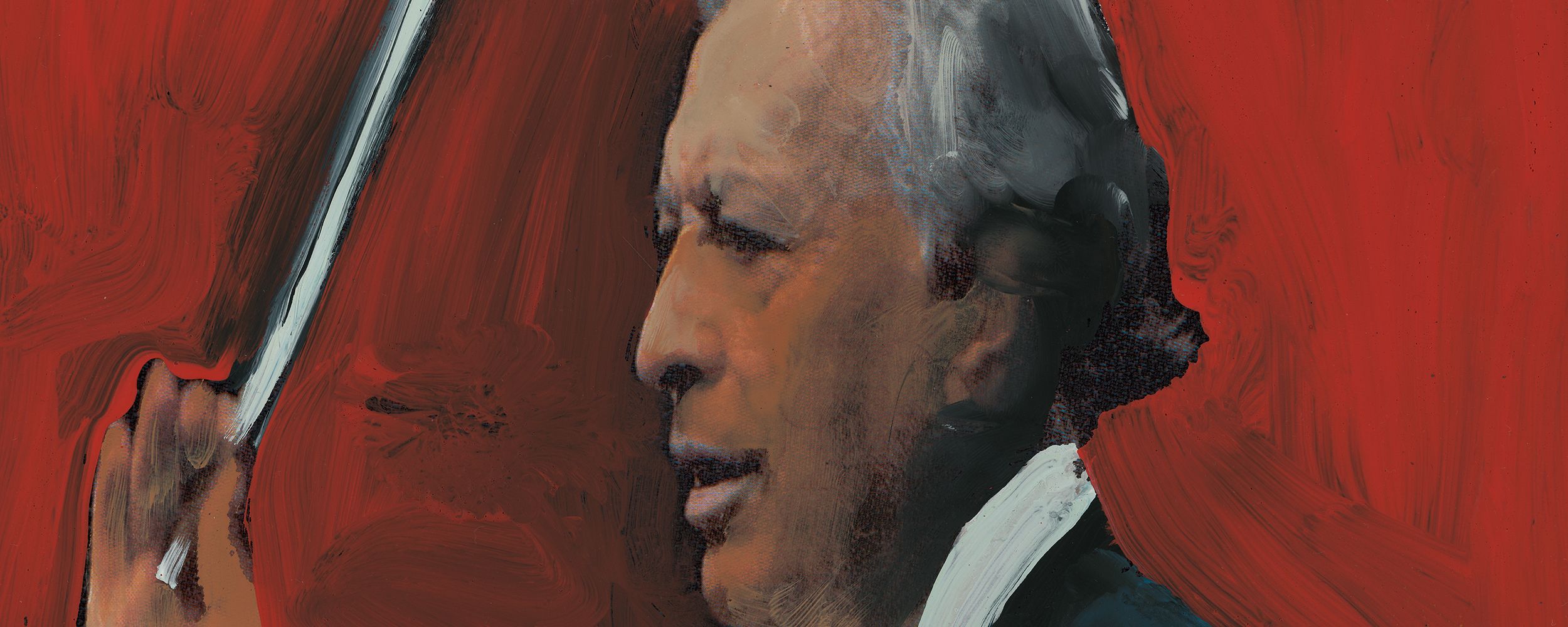
On Wednesday, 29 April 2026 at 8:00 p.m., Maestro Zubin Mehta, Honorary Conductor for Life of the Maggio, will take the podium of the Teatro’s Sala Grande for a major symphonic concert in celebration of his 90th birthday. The programme features Ludwig van Beethoven’s Symphony No. 9 in D minor.
The soloists are soprano Jessica Pratt, mezzo-soprano Szilvia Vörös, tenor Bernard Richter, and bass Simon Lim.
The Chorus Master of the Maggio is Lorenzo Fratini.
Orchestra and Chorus of the Maggio Musicale Fiorentino.
On this occasion, the Teatro del Maggio will dedicate to the Maestro a photographic exhibition in the Foyer, featuring 90 images retracing his career.
The public is kindly informed that tickets for the concert are sold out in all seating categories.
Florence, 28 April 2026 – The Teatro del Maggio Musicale Fiorentino celebrates one of the most important and meaningful events of the year, also from an emotional standpoint: on Wednesday, 29 April 2026 at 8:00 p.m., in the Sala Grande, a symphonic concert is scheduled in honour of Maestro Zubin Mehta’s ninetieth birthday. The Maestro, Honorary Conductor for Life of the Maggio and an indispensable figure in the musical life of Florence and on the international scene—deeply intertwined with the artistic and musical history of the Teatro—has chosen to celebrate his birthday, on the very day of the anniversary, in Florence itself, underscoring his profound bond with the city, the Orchestra, the Chorus, and the Teatro del Maggio, which he calls “my Florentine family.” “A gesture worth more than a thousand words, an act of love for Florence and the Maggio that moves the entire community of our Teatro and its audience,” commented Superintendent Carlo Fuortes.
The programme features Beethoven’s Symphony No. 9 in D minor, Op. 125, the masterpiece of the Bonn genius that embodies ideals of brotherhood and humanity. On the podium, Maestro Mehta conducts the Orchestra and Chorus of the Maggio Musicale Fiorentino; with them are soprano Jessica Pratt, now an artist very much ‘at home’ at the Maggio; mezzo-soprano Szilvia Vörös; tenor Bernard Richter; and bass Simon Lim. The Chorus Master is Lorenzo Fratini.
Principal Conductor of the Maggio from 1985 to 2017, and subsequently appointed Honorary Conductor for Life, Zubin Mehta represents an absolute point of reference for generations of musicians, audiences, and performers. His long association with the Teatro del Maggio—beginning with the concert held at the Teatro Comunale on 11 February 1962 featuring Mahler’s Titan—marked an era of fundamental importance, consolidating the institution’s prestige on the international cultural stage. Over the course of his long career at the Maggio, Maestro Mehta has appeared in more than 2,000 performances, including concerts, operas, and tours. In a relationship built over more than sixty years, his presence on the Florentine podium continues, today as in the past, to stand as a tangible sign of excellence and continuity: the evening is therefore also a festive celebration of the bond between the Maestro and the city of Florence.
The concert thus becomes not only a musical event of the highest level, but a true celebration: a tribute to an extraordinary career marked by appearances on the most prestigious podiums of the world’s leading theatres.
On the occasion of Maestro Mehta’s birthday, in addition to celebrating him on stage, the Teatro is also dedicating to him a photographic exhibition in the Foyer, featuring 90 images and a video retracing his long career. The exhibition will be inaugurated on 29 April at 7:15 p.m. and will remain on display until the end of the Festival, on 1 July.
A rise that began at a very young age, thanks to the training he received from his father, Mehli Mehta, a musician and founder of the Bombay Symphony Orchestra: “My father was a great violinist,” recalls Maestro Mehta, “he studied in New York for five years with a great violin teacher and sent us in Mumbai all the programmes he performed, with his comments. He provided me with continuous training; every day I received his mail from New York.” Supported also by his mother, Mehta later moved to Vienna: “I attended the conservatory and in my second year I entered Hans Swarowsky’s conducting class at the Akademie für Musik. He was my teacher for the rest of my life and passed on all his secrets to me.” From Vienna began an extraordinarily rapid career: just over twenty, he made his debut in Liverpool and conducted some of the world’s leading orchestras, including the Vienna and Berlin Philharmonic Orchestras and the Israel Philharmonic Orchestra, with which he has maintained a relationship spanning more than half a century. He also served as Music Director of the Montreal Symphony Orchestra, the Los Angeles Philharmonic, and the New York Philharmonic for thirteen years—the longest tenure in the orchestra’s history. Alongside his international concert activity came his operatic debut with Tosca in Montreal in 1963, while at the Maggio his operatic conducting debut followed the next year, in July 1964, with a title that would soon become one of the cornerstones of his repertoire: Verdi’s La traviata, the first operatic milestone of his long and fruitful Florentine journey.
As Maestro Mehta himself has emphasized, the choice of Beethoven’s Ninth Symphony to celebrate his birthday is particularly meaningful: “The text by Friedrich Schiller of the famous Ode to Joy says it all; it speaks of peace and brotherhood, which is what the whole world hopes for at this moment. I share that text; music can be an instrument of brotherhood.”
The Concert:
Beethoven’s final symphonic work, Symphony No. 9 in D minor, Op. 125, the “Choral,” marked a point of no return in the history of music. After the Ninth, no composer could approach the genre without reckoning with that unsurpassed model of artistic achievement left by the Master from Bonn. The genesis of Beethoven’s last symphony dates back to 1793, when the composer first expressed the desire to set Friedrich Schiller’s Ode to Joy to music. The message of freedom and brotherhood contained in the poem’s verses became so deeply rooted in the mind of the young composer that in 1795 Beethoven wrote a lied, Gegenliebe, in which the melody that would later take its definitive form in the famous Ode to Joy of the Ninth Symphony appears in embryonic form. Even clearer similarities can be found years later in the Choral Fantasy, Op. 80, a kind of preparatory workshop for the Ninth, to which Beethoven devoted himself between 1822 and the early months of 1824. The premiere of Symphony No. 9—at the Theater an der Wien on 7 May 1824—was preceded by exhausting rehearsals, made even more difficult by the fact that Beethoven himself conducted, by then completely deaf and no longer able to guide the orchestra. Nevertheless, this did not diminish the success of his final symphonic effort, which was immediately hailed as an absolute masterpiece. Like a litmus test, the Ninth Symphony encapsulates all the musical achievements Beethoven had developed over the years: from formal freedom—most notably in the fourth movement, where for the first time within a symphonic framework instrumental music gives way to the human voice—to the masterful use of variation and counterpoint, from the thematic relationships that recur throughout the work, lending a sense of cyclicity and unity to the score, to the universal message of brotherhood sung by the soloists and chorus in the final movement.
We would like to thank the Friends of the Teatro del Maggio of the Maggio Musicale Fiorentino for the cake donated to Maestro Mehta.
The photography exhibition, set up in the foyer in the area overlooking the cloister, will be open to the public starting at 7:15 pm. The concert is preceded by a listening guide given by Katiuscia Manetta in the Galleria Foyer of the Sala Grande. The concert is reserved for ticket holders and takes place 45 minutes before the start of the show (duration: approximately 30 minutes).