Alban Berg’s Wozzeck: three performances from 27 September to 3 October in the Main hall
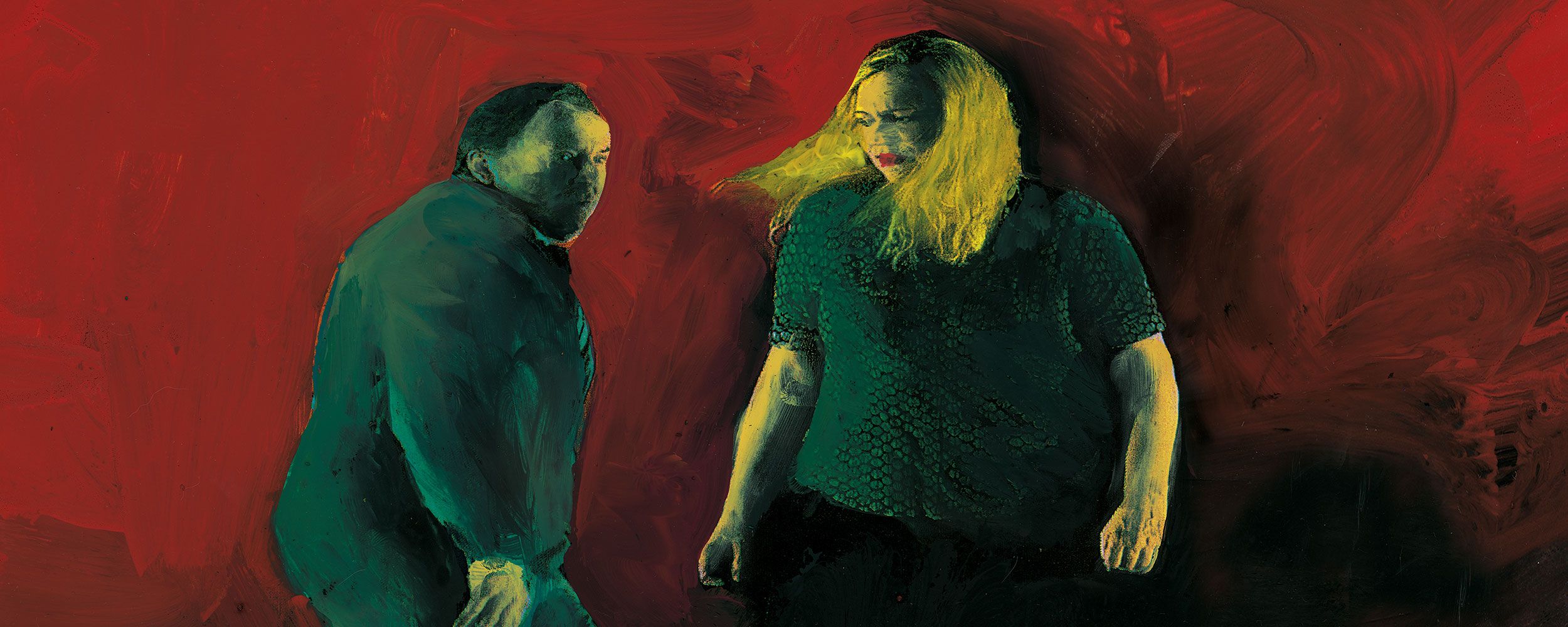
At the Teatro del Maggio, Alban Berg’s Wozzeck, one of the most significant operas of the 20th century, takes the stage for three performances from 27 September to 3 October in the Main hall.
Thomas Guggeis conducts the Orchestra, Chorus of the Maggio Musicale Fiorentino and the Maggio Academy’s Children’s Choir.
The production is directed by Deborah Warner, making her debut at the Maggio.
A Royal Opera House, Covent Garden production.
The performance on 30 September will be broadcast live on Rai Radio 3.
Florence, 23 September 2026 – Alban Berg’s Wozzeck is the first operatic production of the autumn season at the Teatro del Maggio Musicale Fiorentino. A masterpiece by the Austrian composer and one of the most significant operas of the 20th century, it comes to the stage of the Main hall for three performances: the opening performance is scheduled for Sunday 27 September at 5 pm, followed by two performances on Wednesday 30 September at 8 pm and Saturday 3 October at 3.30 pm. This marks the fifth time Wozzeck has been programmed in the history of the Maggio’s seasons, following its most recent appearance 28 years ago.
Thomas Guggeis conducts the Orchestra and Chorus of the Maggio Musicale Fiorentino, together with the Maggio Academy’s Children’s Choir. This is Guggeis’s first opera engagement at the Maggio, following the symphonic concert he conducted in June. He will also take to the podium of the Mehta hall on 26 September, the day before the opening of Wozzeck, to conduct Gustav Mahler’s Symphony No. 2 in C minor.
The production is directed by Deborah Warner, making her debut at the Maggio. She brings to Florence the Covent Garden production first staged in 2023, where it was met with great acclaim.
The Chorus of the Maggio is directed by Lorenzo Fratini, while the Maggio Academy’s Children’s Choir is directed by Sara Matteucci.
The cast features Wolfgang Koch in the title role of Wozzeck and Anja Kampe* as his companion Marie, alongside Ian Koziara (Tambourmajor), Sam Furnes* (Andres), Wolfgang Ablinger-Sperrhacke (Hauptmann), Clive Bayley (Doktor), Barnaby Rea and Alex Otterburn (the two Handwerksbursch), Dafydd Jones (Der Narr), Helena Rasker (Margret), and Massimiliano Esposito (Ein Soldat). Kampe and Furnes, in the same roles, were also part of the cast of the Covent Garden production in 2023.
Inspired by Georg Büchner’s play Woyzeck, Wozzeck grew out of Berg’s desire to bring to the stage a story in which he recognised some of the deepest themes of the Expressionist sensibility: alienation, nightmare, violence and the progressive loss of one’s sense of self. Berg attended a performance of Büchner’s play in 1914 and was profoundly struck by it, to the point of deciding to transform it into an opera. Completed in 1922, Wozzeck premiered at the Staatsoper in Berlin on 14 December 1925. At the heart of the story is a man crushed by social circumstances, poverty and humiliation: a low-ranking soldier subjected to the authority of his superiors and exploited by the Doctor for his experiments, unable to escape a reality that gradually draws him into a terrible spiral of madness and violence. Alongside him is Marie, the mother of his child, who becomes the focus of a drama in which desire, jealousy and despair become increasingly intertwined, ultimately leading to a tragic outcome.
Thomas Guggeis conducts the production, returning to the Maggio just a few months after the concert he gave last April as part of the 88th Maggio Festival. Wozzeck marks his first opera production at the Maggio. “It is a production I really like,” says Guggeis in his interview for the programme, “because it succeeds in combining a realistic dimension in its portrayal of characters and situations with a more imaginative quality that is highly poetic. Having already conducted his Lulu in Frankfurt two years ago, this opera allows me to explore Berg’s world on a deeper level. “We are dealing with an absolute masterpiece of 20th-century musical theatre. Wozzeck is a dense work, with a simply perfect dramatic arc and a musical language that constantly adapts to the tragic story of the soldier Wozzeck. From a purely musical point of view, I was struck by the extraordinary variety of forms, instrumental colours and perfectly balanced proportions within the overall architecture of the 15 scenes, each with its own distinctive character. Everything changes from one moment to the next; something new is always happening. “It is complex music, but its narrative rhythm is remarkably well structured, thanks to Berg’s genius in translating each scene into an appropriate musical form – the passacaglia in the Doctor’s scene, for example. The pace is fast and relentless, which makes it particularly suited to our own times. Today’s audiences will have no difficulty connecting with Wozzeck’s story, also because of the way Berg tells it: it feels remarkably close to our own reality. Through its precise and intense structures, the music manages to fill the heart with emotion. It is a drama that speaks to us directly.”
The opera’s human and social dimensions lie at the heart of Deborah Warner’s nuanced narrative interpretation. She approaches Wozzeck’s story as a cross-section of society in which power relations, militarism and exploitation become an integral part of everyday life. The world portrayed in her production is that of a provincial German town populated by soldiers and ordinary people, where brutality is not presented as an exceptional phenomenon but as a constant presence, capable of infiltrating everyday life. The British director, who made her operatic debut with this title at Opera North in Leeds in 1993, has highlighted the themes that most strongly define her production: “It is an opera that confronts issues such as mental health, bullying, poverty and the desperation of the lives it portrays head-on. ‘Wir arme Leut!’ Wozzeck laments (‘We poor people!’), and this is at the very heart of the opera, whose relevance today is as striking as it was when it was written in the aftermath of the First World War. “At the centre of the drama there is no king or great leader, but a working man struggling to make a living. The opera possesses a visceral intensity that made it my gateway into the world of opera, as well as the very first opera I ever directed. It was a wonderful experience to return to this work at the Royal Opera House in 2023, thirty years after my first production, and it has been an additional privilege to delve even deeper into it during this revival here in Florence over the past few weeks. “Like all great masterpieces, this work teaches compassion to those who experience it, and that is a lesson that remains as relevant as ever – particularly at a moment in world history when paying attention to those at the margins is more urgent than ever.”
The relationship between the movement of the 15 scenes and the flow of the music is particularly significant. In a continuous flow, the production does not conceal the transformations taking place on stage: screens and curtains are used to separate the different settings, while still allowing glimpses of what is happening beyond them, creating a play of silhouettes, transparencies and apparitions. The scenic elements are moved and reassembled before the audience’s eyes, at times on the revolving stage, giving the succession of scenes a continuous, almost cinematic movement. The result is an unstable space in which reality seems capable of changing shape from one moment to the next. The stage thus becomes an environment that accompanies Berg’s music without ever competing with it, allowing the full psychological intensity of the story to emerge.
Over the course of the Maggio’s seasons, Berg’s opera has already been programmed four times: in January 1963, conducted by Bruno Bartoletti and directed by Virginio Puecher (a production revived the following year as part of the historic Expressionist Maggio Festival); in May 1979, once again conducted by Bartoletti and directed by Liliana Cavani; and, finally, in the celebrated production staged in June 1998, conducted by Zubin Mehta and directed by William Friedkin.
The Opera
“I saw Wozzeck on stage before the war, and it made such an extraordinary impression on me that I immediately decided to set it to music.” These are the words Alban Berg wrote to his friend and fellow composer Anton Webern in 1918, at a time when his name was known only within the relatively small circle of Schoenberg’s pupils. Fame and international recognition would come a few years later, largely thanks to Wozzeck, an opera inspired by Georg Büchner’s play of the same name, which quickly became one of the defining works of the early 20th century and an emblem of Expressionist theatre.
In Büchner’s text, Berg found themes particularly close to the Expressionist aesthetic, including nightmare, mental alienation and brutal murder. The opera, in three acts and fifteen scenes, premiered at the Staatsoper in Berlin on 14 December 1925, receiving considerable acclaim.
Berg conceived the opera as a system of closed forms, in which each scene of every act corresponds to a formal structure drawn from the Western instrumental tradition, including the suite, rhapsody, march and passacaglia, to name but a few, reinterpreted through a stark and anguished orchestral language.
On the vocal side, Wozzeck’s almost spoken Sprechgesang is particularly striking. By dispensing with conventional melodic artifice, it emphasises the protagonist’s deeply painful humanity.