
“Tosca,” January 11–18: conducted by Michele Gamba, directed by Massimo Popolizio
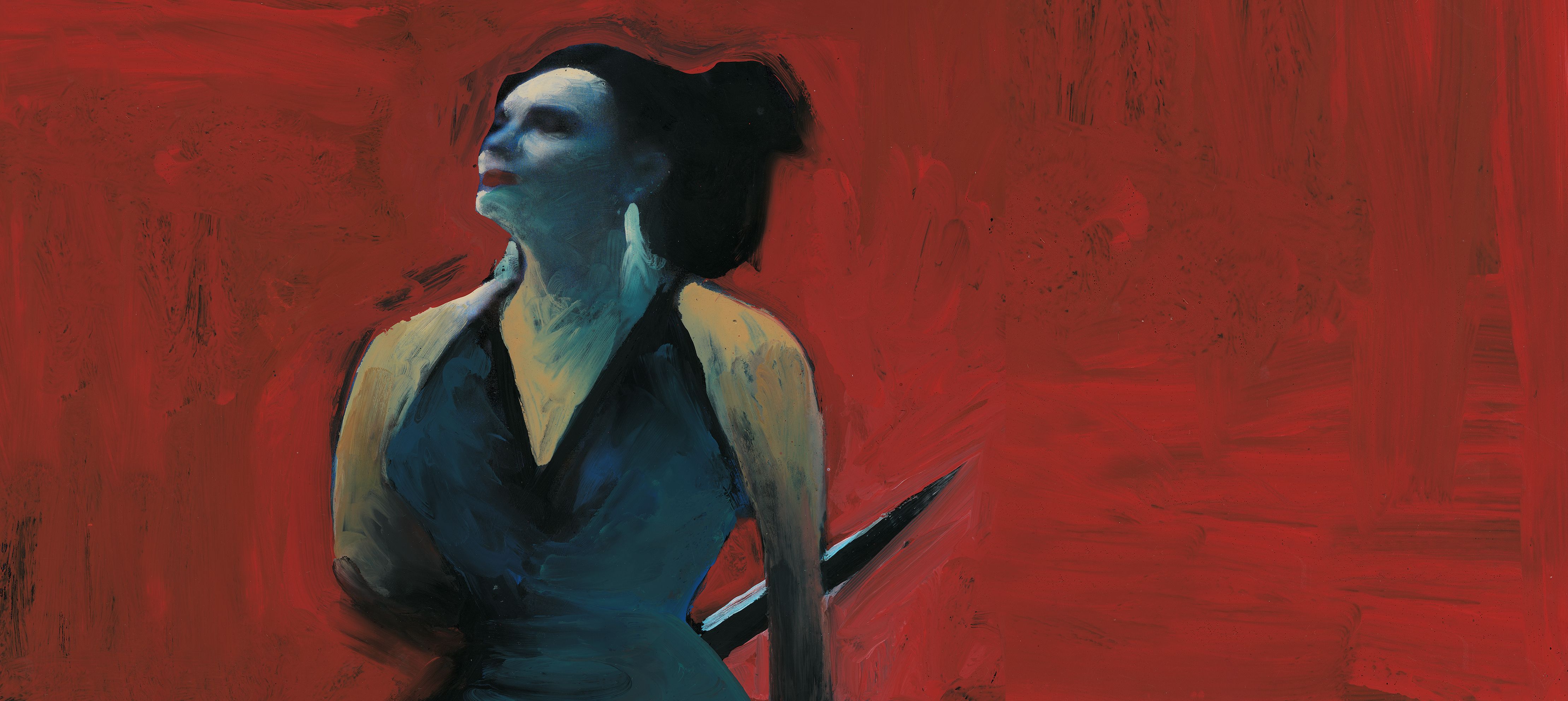
On Sunday, January 11, 2026, at 5:00 p.m., the curtain rises on the Teatro del Maggio’s 2026 opera season. Just a few days after the conclusion of performances of La bohème, another great masterpiece by Giacomo Puccini, Tosca, returns to the stage of the Sala Grande.
On the podium, leading the Orchestra, the Maggio Chorus, and the Children’s Chorus of the Accademia del Maggio, is Maestro Michele Gamba. The production is a revival of the staging first presented in May 2024, directed by Massimo Popolizio.
In the principal roles, Chiara Isotton and Marta Mari (performances on January 15 and 17) appear as Floria Tosca; Vincenzo Costanzo and Bror Magnus Tødenes (performances on January 15 and 17) sing the role of Mario Cavaradossi; and Alexey Markov and Claudio Sgura (performances on January 15 and 17) portray Scarpia.
Five additional performances are scheduled: January 13, 15, and 16 at 8:00 p.m.; January 17 at 5:00 p.m.; and January 18 at 3:30 p.m.
Production by the Maggio Musicale Fiorentino.
Florence, January 5, 2026 – Just days after the conclusion of performances of La bohème, the curtain rises on the Teatro del Maggio’s 2026 opera season with another of Giacomo Puccini’s most beloved masterpieces, Tosca. Scheduled for Sunday, January 11, 2026, at 5:00 p.m. in the Main hall, the opera returns in the acclaimed production directed by Massimo Popolizio, first presented during the 86th Maggio Musicale Fiorentino Festival.
Five additional performances are scheduled: January 13, 15, and 16 at 8:00 p.m.; January 17 at 5:00 p.m.; and January 18 at 3:30 p.m.
On the podium, leading the Orchestra, the Maggio Chorus, and the Children’s Chorus of the Accademia del Maggio, is Maestro Michele Gamba, who returns to the Teatro after conducting Rossini’s Il barbiere di Siviglia in October 2020. Sets are designed by Margherita Palli; costumes by Silvia Aymonino; and lighting by Pasquale Mari.
The Chorus Master of the Maggio Chorus is Lorenzo Fratini; the Children’s Chorus is prepared by Sara Matteucci.
Performed 17 times over the course of the Teatro’s seasons—most recently in May 2024—Tosca stands among the most celebrated operatic titles of all time. The subject of the opera, which Puccini began composing in the spring of 1896, just a few months after the premiere of La bohème, is based on the drama La Tosca by Victorien Sardou. Puccini had seen the play in Milan in 1889, performed by the great Sarah Bernhardt, and was deeply captivated by it. Determined to transform the work into an opera, he discussed the project with Giulio Ricordi and, after obtaining Sardou’s authorization, set to work, once again entrusting the libretto—following La bohème—to Giuseppe Giacosa and Luigi Illica. The opera premiered on January 14, 1900, at the Teatro Costanzi in Rome, immediately securing a place in the repertoire of the world’s leading opera houses.
On stage is a cast of outstanding talent, led by Chiara Isotton—making her debut at the Teatro del Maggio and widely regarded as one of today’s most acclaimed interpreters—who sings the role of Floria Tosca, a part that has recently played a central role in her career and which she has performed repeatedly in recent years on some of the most prestigious national and international stages, including Teatro alla Scala, Teatro La Fenice, the Frankfurt Opera, the Tokyo Opera, and the Metropolitan Opera in New York. The soprano will also return to the Teatro within the coming months for Verdi’s Un ballo in maschera, scheduled for next May as part of the 88th Maggio Musicale Fiorentino Festival.
Marta Mari appears in the title role in the performances on January 15 and 17.
The role of Mario Cavaradossi is sung by Vincenzo Costanzo and Bror Magnus Tødenes (performances on January 15 and 17).
Vincenzo Costanzo—among the most talented young interpreters of Puccini’s repertoire and returning to the Maggio stages after his acclaimed performance as Pinkerton in Madama Butterfly in autumn 2024—has already portrayed Cavaradossi in Tosca in the production directed by Massimo Popolizio, presented during the 86th Maggio Musicale Fiorentino Festival. Alexey Markov—also returning to the Florentine stage following performances of Tosca at the 86th Maggio Musicale Fiorentino Festival—once again takes on the role of the opera’s antagonist, Baron Scarpia. In the performances on January 15 and 17, the role of Scarpia is sung by Claudio Sgura.
Mattia Denti appears as Cesare Angelotti; Matteo Torcaso sings the role of the Sacristan; Oronzo D’Urso is Spoletta; and Huigang Liu is Sciarrone.
Completing the cast are Carlo Cigni as the Jailer. The role of the Shepherd will be alternated across the six performances by Angelique Becherucci (January 11 and 16), Dalia Spinelli (January 13 and 17), and Spartaco Scaffei (January 15 and 18).
Speaking about his interpretation of the opera in an interview for the programme book, Maestro Michele Gamba highlighted the elements that most strongly define Puccini’s masterpiece: “In an opera such as Tosca, so frequently performed and so deeply loved, we always rediscover something we may have previously overlooked or taken for granted: the Impressionistic colours of the flutes in Recondita armonia, or the Gregorian harmonic context of the scenes set at Sant’Andrea della Valle. In a musical fresco so perfect and complex, there is no single ‘vanishing point’ that draws the listener’s attention; rather, there is a multiplicity of details that merge into a listening experience that can never remain passive or self-satisfied. Puccini is a thoroughly twentieth-century composer: his revisions and reworkings are the result of careful reflection, closely linked to dramaturgical and thematic effectiveness. It is important to retrace the creative stages that led to the final outcome, yet I believe that, for Puccini, the definitive versions that have come down to us were those that fully satisfied him. Precisely because of the historical proximity of Puccini’s output, we are able to approach tradition and performance practice with greater adherence to stylistic and aesthetic principles: Toscanini’s recordings and Ricci’s notes are, of course, sources of primary importance, alongside others handed down to us by the vocal interpreters themselves. Moreover, in Tosca the theatrical and musical dimensions merge within a fully mature compositional matrix. If in La bohème we perceive the colours of the Parisian haze, and in Turandot we will encounter the rupture of a musical language opening toward the European avant-gardes of the 1920s, it is in Tosca that—at least in my view—the composer expresses himself with the awareness of having fully developed a distinctive and unmistakable personal language.”
The production revives the staging presented in May 2024—warmly received by both audiences and critics—directed by Massimo Popolizio. On the occasion of the Florentine premiere of his production, the renowned actor and director highlighted the most distinctive features of his interpretation of Puccini’s masterpiece, which he envisioned and “transposed” to a Rome shifting from the 1920s to the 1930s, thus offering a new perspective on the drama in order to enhance its central themes: “Together with Margherita Palli, we set ourselves the goal of recreating a sense of Roman grandeur which, rather than looking—especially in terms of the settings we see on stage—to the Baroque splendour of the original locations of the opera, takes as its reference the ‘modern majesty’ that can be felt in Rome’s EUR district. I would like to stress, however, that I did not seek to venture into unusual or eccentric directorial solutions, but rather to find another point of view through which to bring out the opera’s themes more effectively. For example, during the Te Deum, what we will see are children from the outskirts—such as the EUR area—women wearing their finest dresses for the occasion, nuns in their convent habits; in short, we will not see costumes or stage objects of overwhelming visual impact. This process of ‘stripping back’ toward which we have oriented ourselves in fact renders what unfolds on stage almost more sacred. As a reference, we looked to a great film by Bernardo Bertolucci, The Conformist, in which the atmosphere of Rome is powerfully evoked—an atmosphere that we seek to ‘bring onto the stage’ here at the Maggio with this new production of Tosca. In our vision, the Rome in which the protagonists move is certainly elegant, yet also extremely violent. One of the pillars of this opera is Scarpia, who is not only a violent man but also profoundly sadistic. This is also underlined scenically by the objects collected by this character—macabre and horrific items: in the second act, for example, we will see a bookcase in which stuffed animals and beasts are preserved. Thus, what we have sought to conceive and stage is a temporal transposition to a Rome that is both beautiful and violent, one that does not alter the substance of the narrative and, above all, does not change the relationships between the protagonists on stage.”
Also in connection with the 2024 staging of the production, the Chorus Master of the Maggio, Lorenzo Fratini, emphasized the significance of one of the most famous moments in the opera—and in Puccini’s entire operatic output—the celebrated Te Deum that concludes Act I: “Puccini had the brilliant intuition to end the first act with this Te Deum, which is the hymn of greatest joy in the Catholic liturgy. This jubilant chorus, in fact, stands in stark contrast to the words spoken simultaneously by Scarpia, which are driven by entirely different intentions. The distinctive features of this moment lie in the fact that the first part of the chorus is not sung but declaimed: Puccini thus introduces into the opera a portion drawn directly from the liturgical text. Another striking characteristic is the chorus singing in unison: there is no accompaniment, apart from the trombones that sustain the final notes of the first act and ultimately take up Scarpia’s theme.”

Ticket office

Work with us

Amministrazione Trasparente - Privacy & Cookie policy