Thomas Guggeis - “Das Lied von der Erde” by Gustav Mahler: 23 April 2026
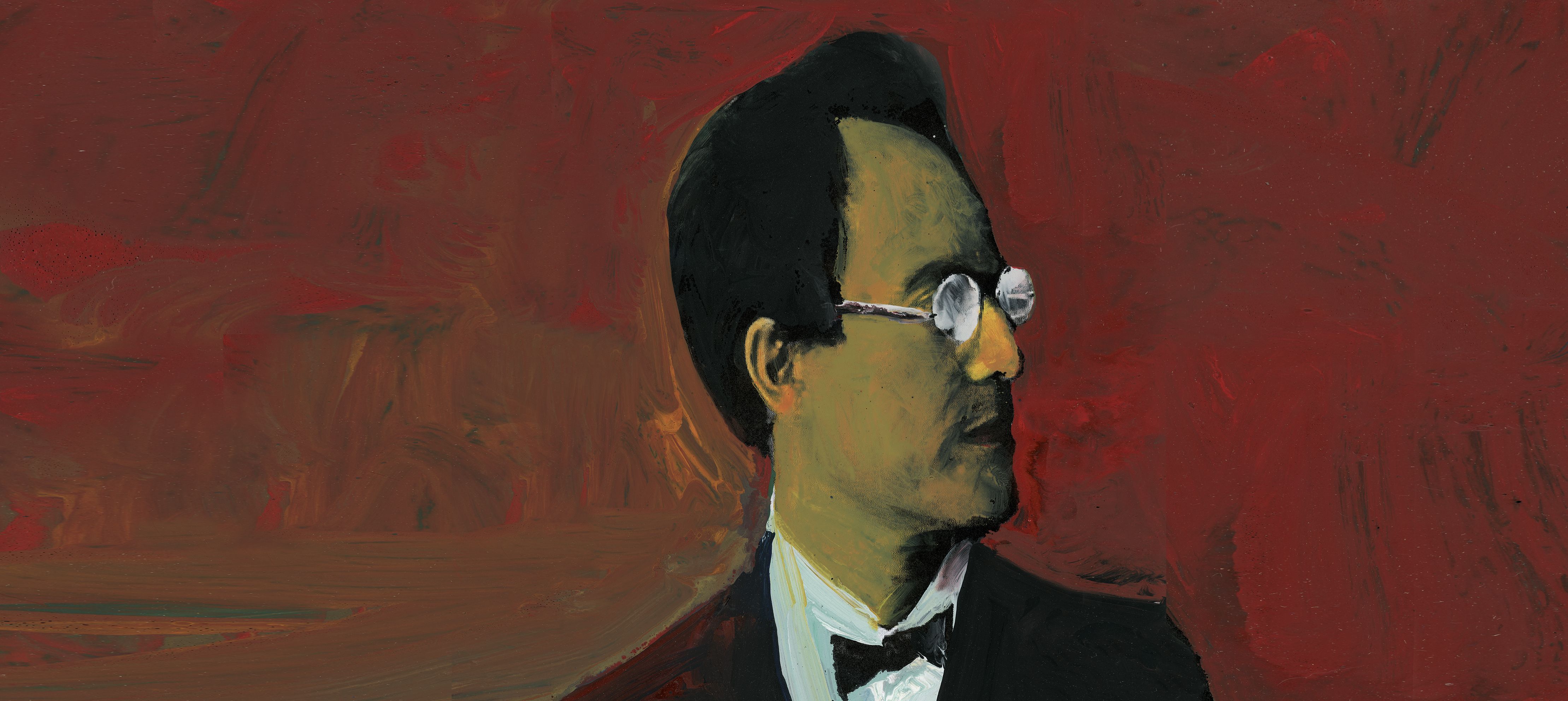
On Thursday, April 23 at 8:00 PM, Maestro Thomas Guggeis returns to the podium of the Sala Mehta, conducting the Orchestra del Maggio, for the first symphonic concert of the 88th Maggio Festival.
The soloists are mezzo-soprano Tanja Ariane Baumgartner and tenor AJ Glueckert.
The program features Das Lied von der Erde (The Song of the Earth) by Gustav Mahler.
Poster © Gianluigi Toccafondo
Florence, April 22, 2026 – Maestro Thomas Guggeis, one of the most acclaimed conductors of his generation, returns to lead the Orchestra del Maggio Musicale Fiorentino less than a year after his highly successful debut in June 2025.
On the program, Thursday, April 23, 2026, at 8:00 PM in the Sala Mehta, is a performance of Das Lied von der Erde by Gustav Mahler.
Thomas Guggeis, whose career has seen rapid and significant international growth, is now a regular guest of major European musical institutions: after his studies in Munich and Milan, he served as Staatskapellmeister at the Berlin State Opera and First Kapellmeister at the Stuttgart State Opera. A student of Daniel Barenboim, he has collaborated with major orchestras such as the Staatskapelle Dresden, the Munich Philharmonic, the Vienna Symphony Orchestra, the Orchestra Sinfonica di Milano, and the RAI National Symphony Orchestra.
In recent seasons, he has been a guest conductor at Teatro alla Scala in Giorgio Strehler’s historic production of Mozart’s Die Entführung aus dem Serail, at the Metropolitan Opera with Der fliegende Holländer, and at the Vienna State Opera with Die tote Stadt, Salome, La traviata, and Falstaff.
The evening’s soloists are mezzo-soprano Tanja Ariane Baumgartner and tenor AJ Glueckert.
The program includes one of Gustav Mahler’s most celebrated compositions, Das Lied von der Erde, which is structured in two parts: the first consisting of five lieder, and the second of the final lied, Abschied (in which two poems from the collection are combined), which alone, with its nearly six hundred bars, balances the first half of the work. The two macro-sections, seemingly independent, are in fact connected by a dense network of references and analogies in a mirror-like interplay between life, death, and rebirth that unfolds within the music.
The concert:
Das Lied von der Erde marks the first stage of Gustav Mahler’s long and poignant farewell to life and music, which would continue with the Symphony No. 9 and the unfinished Tenth Symphony. During the summer of 1907, Mahler received as a gift an anthology of Chinese poems translated into German titled The Chinese Flute. The contrast between dark pessimism and a love for earthly things that characterizes the poetry seemed perfectly in tune with the composer’s state of mind during that difficult period of his life. Mahler selected seven poems to set to music in what he described as a “symphony for contralto voice, tenor, and large orchestra,” although the form of the composition ultimately resists a precise and unified definition. In The Song of the Earth, the composer transcends the boundaries between genres, merging the world of the lied and that of the symphony into a new musical and spiritual dimension.
Das Lied von der Erde is divided into two parts: the first made up of five lieder, and the second consisting of the final lied, Abschied (in which two poems from the collection are combined), which alone, with its nearly six hundred bars, balances the first half of the work. The two macro-sections, apparently independent, are actually linked by a dense network of references and analogies in a play of mirrors between life, death, and rebirth that resonates throughout the music: for example, the second and sixth songs are permeated by a premonition of death and frame the three central movements, which instead explore more lively themes (youth, beauty, and the exhilaration brought by wine and spring). Likewise, spring—denied to the drunken man in the fifth lied—returns at the close of the cycle, this time with the promise of a new life, free from earthly suffering.