"Simon Boccanegra": dal 15 al 24 novembre 2026
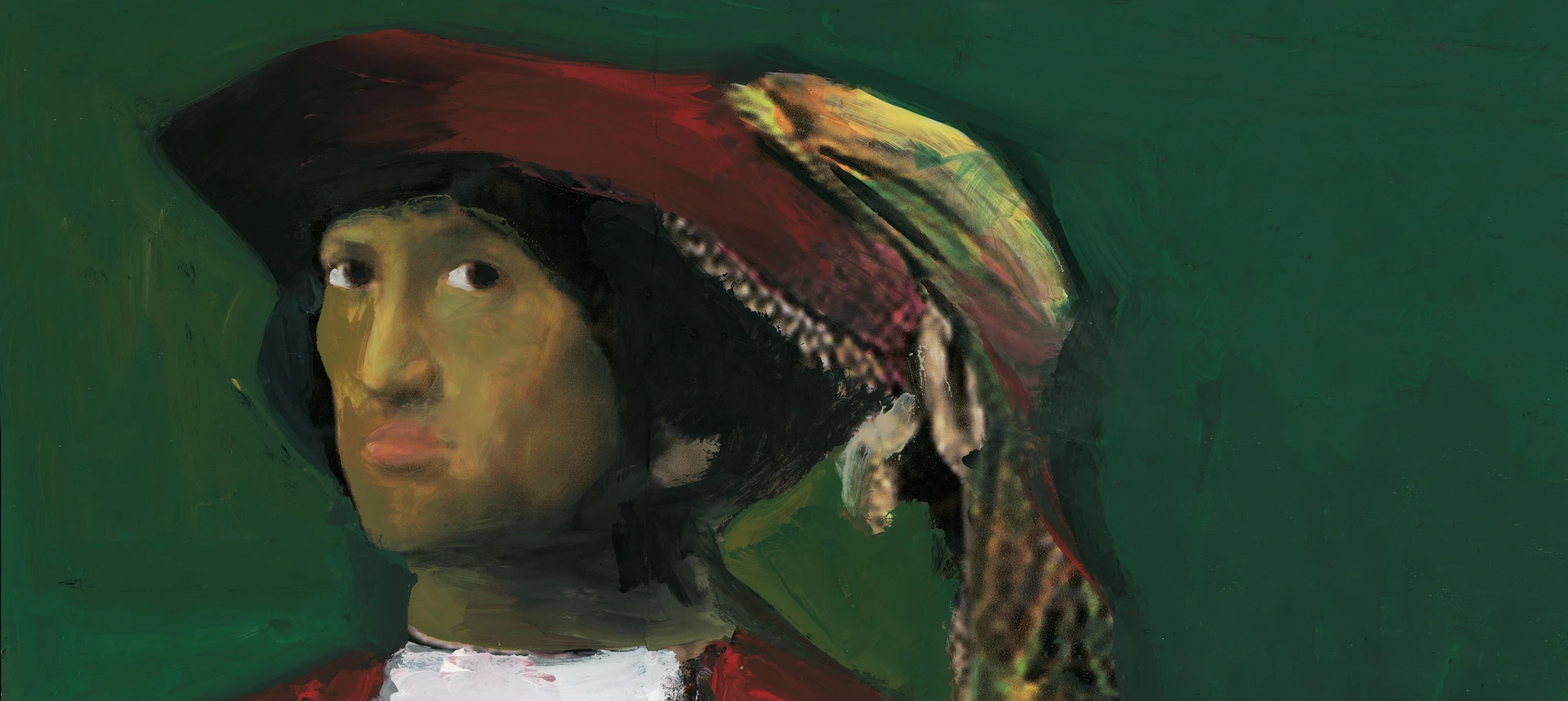
Simon Boccanegra by Giuseppe Verdi at the Teatro del Maggio from 15 to 24 November in a new production
James Conlon conducts the Orchestra and Chorus of the Maggio Musicale Fiorentino; stage direction by Àlex Ollé.
The principal cast features George Petean, Jongmin Park, Carolina López Moreno, Luciano Ganci and Lodovico Filippo Ravizza.
A new production by the Teatro del Maggio Musicale Fiorentino, in co-production with the Palau de les Arts Reina Sofía in Valencia.
The performance on 18 November will be broadcast live on Rai Radio 3.
Florence, 12 November 2026 - With Simon Boccanegra, the melodrama in a prologue and three acts by Giuseppe Verdi, the 2026 opera season of the Maggio Musicale Fiorentino draws towards its conclusion. The penultimate opera production of the year in the Teatro's Main Auditorium, this Verdi masterpiece - one of the most complex and fascinating works in the composer's entire catalogue - will be presented in a new production, created in co-production with the Palau de les Arts Reina Sofía in Valencia, where it will be revived in February 2027.
A timeless opera in which the characters' private lives are constantly intertwined with political and social tensions, against a backdrop of power struggles, rivalries and conspiracies.
The premiere is scheduled for Sunday, 15 November at 5 pm, followed by three performances: 18 November at 8 pm, 22 November at 3.30 pm and 24 November at 8 pm. The performance on 18 November will be broadcast live on Rai Radio 3.
This Verdi masterpiece, which has not been performed in Florence for 24 years, has appeared five times in the history of the Maggio's seasons: first in 1938, conducted by Vittorio Gui and directed by Gustav De Olàh; then in 1961, once again with Gui conducting and Aldo Mirabella Vassallo directing; in 1988 (in the 1881 version), conducted by Myung-Whun Chung and directed by Virginio Puecher; in 1994, conducted by Fabio Luisi and directed by Gianfranco Ventura; and, most recently, in 2002, conducted by Claudio Abbado and directed by Peter Stein.
On the podium of the Orchestra and Chorus of the Maggio Musicale Fiorentino will be Maestro James Conlon, one of the most distinguished conductors on the international music scene. This marks his fourth Verdi opera at the Maggio: he made his debut here in spring 1985 with Don Carlo, followed by Macbeth in 2013 and Ernani in November 2022.
Stage direction is by Àlex Ollé, making his debut at the Maggio. One of the founders of the Catalan theatre company La Fura dels Baus - which was responsible for the celebrated Wagner Ring Cycle presented at the Teatro in 2007 under the baton of Zubin Mehta - Ollé has developed a distinctive stage language characterised by powerful visual and theatrical impact, combining spectacular elements with dramatic depth.
Set design is by Alfons Flores, costumes by Lluc Castells and lighting design by Marco Filibeck. The Chorus of the Maggio is prepared by Lorenzo Fratini.
The cast features George Petean as the title character, Simon Boccanegra, returning to Florence following his performances in Umberto Giordano's Siberia in July 2021; Jongmin Park as Jacopo Fiesco, back at the Teatro after the Missa Solemnis on 3 April; and Carolina López Moreno as Amelia Grimaldi (Maria Boccanegra), returning to the Maggio stage after La bohème in December 2025.
Luciano Ganci, who last appeared at the Maggio as Turiddu in Cavalleria rusticana in February, will sing the role of Gabriele Adorno, while Lodovico Filippo Ravizza, whose most recent engagement at the Teatro was in La traviata in November 2024, will take the role of Paolo Albiani.
The cast is completed by Huigang Liu as Pietro, Luca Tamani as a Captain of the Crossbowmen and Suji Kwon as Amelia's maid.
Speaking about the opera, Maestro James Conlon - who has conducted this title in more than thirty performances throughout his career - emphasised the significance and musical intensity of the work within Verdi's output:
“Simon Boccanegra is one of Giuseppe Verdi's most significant and extraordinary operas. Giorgio Strehler described it as the composer's ‘most complex political drama’. I believe that Verdi scholars, conductors, opera lovers and all those who hold Verdi in the highest regard place this work in a category of its own. Simon Boccanegra represents another decisive step forward in Verdi's creative journey: it is one of his most intense and heartfelt works, distinguished by its depth, beauty and humanity.”
In Ollé's production, the action is set in the present day. Alfons Flores's dark, entirely grey-toned stage design is an imposing architectural structure in its own right, which both enhances and is enhanced by the revolving stage, measuring 17 metres in diameter.
The costumes, designed by Lluc Castells, follow an equally dark aesthetic, highlighting the conflict at the heart of the opera - both on stage and within the narrative - between opposing political ideals and social classes.
Only two characters will wear lighter, brighter costumes: Amelia and, at the beginning of the opera, Maria. Their white garments do not symbolise purity, but rather freedom. The only striking touch of colour on stage comes from the red seating of the amphitheatre in the Genoese Senate.
“In Simon Boccanegra, Verdi transforms a medieval tale of conspiracies into a reflection on the fragility of power and its ability to penetrate the most intimate spheres of human life,” explains Àlex Ollé, discussing his production and his decision to bring the events closer to the present day.
“This is why, in this staging, we wanted to bring the action into our own time. The aim is not to transpose the story mechanically into the present day, but rather to recognise the mechanisms of power that are still at work today: polarisation, social divisions and the difficulty of building a shared vision.
The set revolves around a large building, a kind of Tower of Babel representing our inability to understand one another and reach agreements. Its architecture brings together different manifestations of power: political, economic and the kind that needs to turn itself into a spectacle. It evokes a parliamentary institution as much as the Genoese Stock Exchange or the Roman Colosseum. It seems to contain everything, yet is unable to resolve its own contradictions. Within it, public and private spaces are part of one and the same organism.”
“This production is truly beautiful, also thanks to the work Ollé has done in bringing the story of Simon Boccanegra into the present day, including through the costumes. We have managed to preserve the soul of the opera, whose story remains remarkably relevant today, even in relation to the political situation we are experiencing.
My first experience with Simon Boccanegra was in Rome in 2002, under the baton of Muti, and it has always been a benchmark work for me. I believe that this opera allows us to truly perceive the essence of Verdi's compositions. Finally, I think that the role of Boccanegra is one of the most positive roles an artist can perform.”
These are the words of George Petean, speaking about his interpretation of Simon Boccanegra.