"Romanzo criminale" by Nicola Piovani: from 23 to 31 October
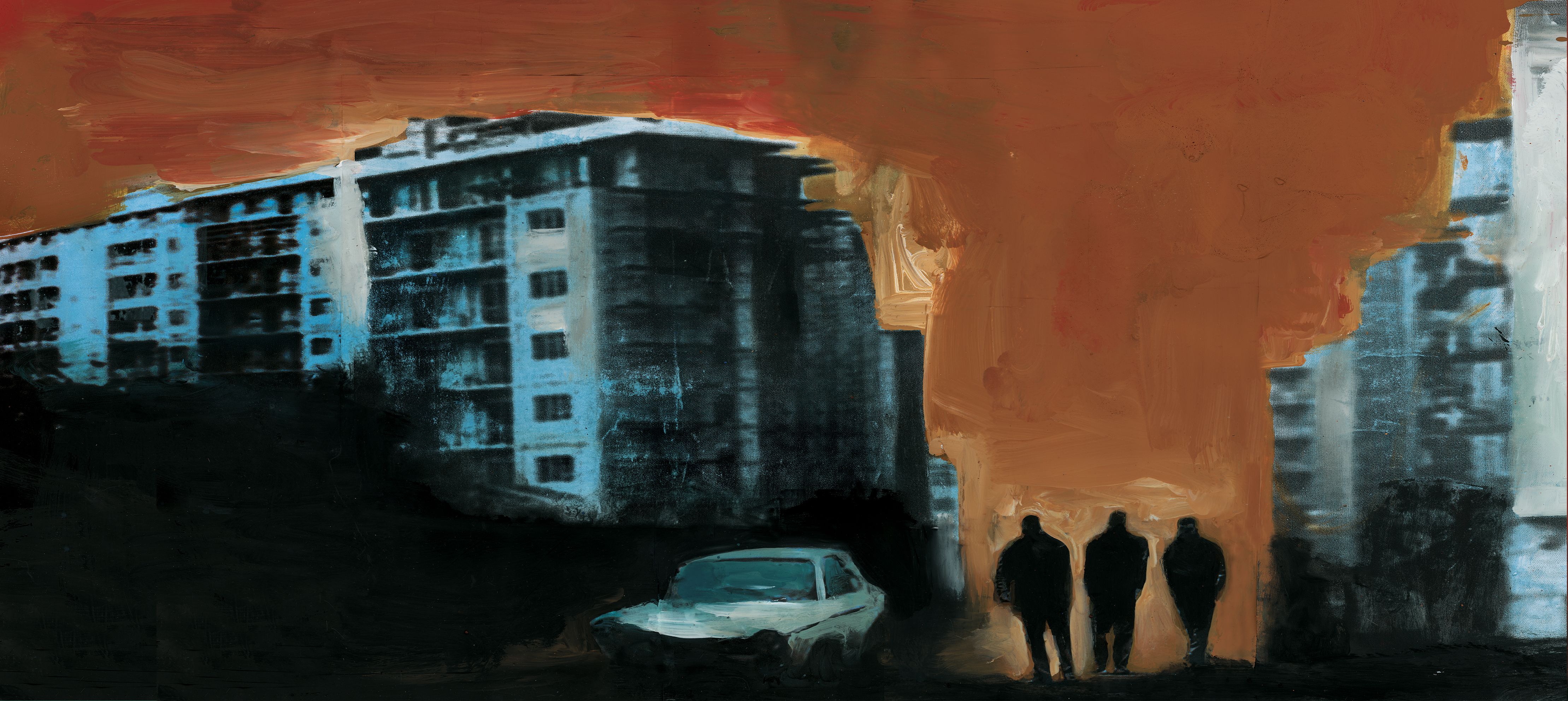
The world premiere at the Maggio of a new opera based on Giancarlo De Cataldo’s celebrated novel
On Friday, 23 October at 8 pm, the new opera commissioned by the Teatro del Maggio Musicale Fiorentino and the Fondazione Musica per Roma makes its debut in the Sala Grande.
Nicola Piovani conducts the Orchestra and Chorus of the Maggio and signs the music; the libretto is by Giancarlo De Cataldo, and the production is directed by Massimo Popolizio.
Three further performances are scheduled: 25 October at 3.30 pm, 28 October at 8 pm and 31 October at 5 pm.
The performance on 23 October will be broadcast in prime time by Rai Cultura on Rai 3.
Florence, 19 October 2026 – On Friday, 23 October at 8 pm, the Sala Grande of the Teatro del Maggio Musicale Fiorentino will host the world premiere of Romanzo criminale, a new opera based on Giancarlo De Cataldo’s celebrated novel, commissioned jointly by the Fondazione Teatro del Maggio Musicale Fiorentino and the “Fondazione Musica per Roma”.
Three further performances will follow: Sunday, 25 October at 3.30 pm; Wednesday, 28 October at 8 pm; and Saturday, 31 October at 5 pm.
Following its performances in Florence, the opera will be staged in Rome in 2027 at the Auditorium Parco della Musica “Ennio Morricone”. Rai Cultura will broadcast the opera in prime time on Rai 3 on Friday, 23 October at 9.20 pm, on the evening of the world premiere. The television direction is by Claudia De Toma.
This new opera brings to the stage one of the best-known stories in contemporary Italian literature, entrusted to the musical vision of Nicola Piovani, Academy Award winner for his score for Life Is Beautiful. Piovani has composed the music and will conduct the Orchestra and Chorus of the Maggio. The production is directed by Massimo Popolizio, with a libretto by Giancarlo De Cataldo. Lorenzo Fratini is Chorus Master. The set design is by Margherita Palli, costumes by Silvia Aymonino, lighting by Pasquale Mari, choreography by Michele Abbondanza, and visual imagery by Jacopo Stoppa.
Having made its mark on literature with a novel that has become a cult classic, on cinema with the film directed by Michele Placido, and on television with the two-season series directed by Stefano Sollima, Romanzo criminale now embarks on a new artistic journey, entering the world of opera. These adaptations have established the story’s appeal among a broad and diverse audience. The new opera marks an unprecedented chapter in the evolution of a work that has transcended the boundaries of the crime genre to become firmly embedded in the Italian collective imagination.
Bringing together different artistic languages and sensibilities, the project unites three leading figures in Italian culture. Published in 2002, Giancarlo De Cataldo’s novel recounts the rise and fall of the Banda della Magliana, weaving the stories of its members into the wider history of Italy and exploring the shadowy intersections of the country’s political and criminal worlds.
Through its operatic adaptation, this story finds a new form of expression, entering into a dialogue between tradition and contemporary creativity that has long shaped the history of musical theatre and has always been central to the artistic identity of the Maggio Musicale Fiorentino. The aim is not simply to transpose a familiar story into a different medium, but to explore its expressive possibilities through music and theatre, revealing its complexity from a new artistic perspective.
The production features a distinguished cast of opera singers, each taking on one of the story’s central characters. Vanessa Goikoetxea, returning to the Maggio one year after her acclaimed performance in Macbeth last October, plays Patrizia, the captivating prostitute who narrates the story. Anthony Ciaramitaro takes on the role of il Dandi, Matteo Desole plays Commissioner Scialoja, and Toni Nežić portrays il Terribile. Carlo Raffaelli is il Libanese, William Hernández plays il Bufalo, and Alberto Petricca takes on the role of il Freddo. Valentina Pernozzoli plays the Libanese’s mother. Completing the cast, Davide Zaccherini appears as Gemito, while Ilaria Monteverdi plays a young prostitute.
“I have always firmly believed, and continue to believe, that Romanzo criminale was a story destined to reach the opera stage and speak to audiences today,” says General Superintendent Carlo Fuortes. “I believe that an opera must be able to communicate, engage and move its audience. Romanzo criminale has all these qualities. It is certainly a story deeply rooted in Rome, but it is also universal: a tale of ambition, passion, betrayal and intertwined destinies, set against the backdrop of history and collective memory. “Bringing a contemporary story to the opera stage is nothing new, as the great tradition of Italian opera demonstrates through countless examples. To bring this story to life, I had a remarkable team in mind: Giancarlo De Cataldo, the author of the novel, who has written the libretto, bringing the spirit and strength of his characters to the stage; Nicola Piovani, whose extraordinary versatility and rare musical sensitivity allow him to give voice to the complexity of human emotions; and Massimo Popolizio, whose profound knowledge of Rome, theatrical experience and personal connection with this story—which he has already portrayed on the big screen—make him the ideal choice to direct the production.”
The score is by Nicola Piovani, a composer and conductor whose work spans cinema, theatre and concert music. Winner of the Academy Award in 1999 for his score for Roberto Benigni’s Life Is Beautiful, Piovani has developed a musical language that engages with a wide range of narrative forms and genres. Romanzo criminale is his third opera, following Amorosa presenza and Il labirinto di Creta, and sees him take on both composition and musical direction.
“Conceiving a new musical work is an exciting and joyful undertaking, but one filled with questions and a certain amount of apprehension,” Piovani says. “I consider music theatre one of the highest art forms ever invented by humankind over the centuries. The interplay of poetry, singing and stage action, combined with the colours of the orchestra, holds for me a fascination that is both celestial and feverish. “I am delighted to have accepted Carlo Fuortes’s invitation to work at the illustrious Teatro del Maggio, and I am particularly pleased that the opera will also be performed in Rome. A compelling plot and a gifted librettist are essential prerequisites for creating an opera, and in this case both are in place: Giancarlo De Cataldo is not only a great novelist but also a passionate opera enthusiast, and we understood each other from the very beginning.
“Working alongside him is Massimo Popolizio, who has contributed to the creation of this production in precisely the way I would wish every director to work. We are embarking on this theatrical journey together with great enthusiasm, and enthusiasm can often make all the difference.
“Romanzo criminale is the title of a great book and a great film. Trying to turn it into an opera worthy of them will not be easy, but I am fascinated by challenging undertakings.”
Giancarlo De Cataldo thus returns to his novel from a new perspective. “An opera based on Romanzo criminale is a dream come true. Thanks to Carlo Fuortes, I began discovering the world of opera and gradually finding my way into it: I consider myself a newcomer to the world of opera. To see my work now give rise to an opera is a real achievement. I think the idea of breaking new ground in opera is a daring one, and I am immensely pleased to do so with Nicola Piovani and at the Maggio Fiorentino. As Fuortes says, the Teatro del Maggio is also a place where ‘the tradition of the new’ has always been a defining feature, where experimentation and cross-fertilisation between the arts are at home, and where a project like this can therefore take shape with both substance and credibility. “As for the narrative structure, I would like to stress that the opera is not a ‘political account’: the major historical events that form the backdrop to the Banda’s story will not feature, but the powerful core of the original story remains intact. The narrator is Patrizia, a beautiful prostitute who embodies the eternal spirit of the city of Rome, the only true queen in a street world that wears one king after another down. “The opera is in Italian, with just a few exceptions: the slogan ‘Stecca para pe’ tutti’, which marks the founding moment of the gang, and ‘fero’, meaning iron, or a gun—the instrument without which no rise to power is possible. Italian dominates throughout the rest of the work: this is a deliberate stylistic choice.”
The production is directed by Massimo Popolizio, one of the most distinguished actors and directors in Italian theatre, who has long worked on both classical and contemporary texts. He also played il Terribile in the 2005 film adaptation. “For me, the journey of Romanzo criminale has been truly unusual. I read the novel years ago, never imagining that some time later I would take part in the film, playing il Terribile, one of the gang’s earliest antagonists. Now Romanzo criminale has become an opera, premiering at the Maggio Musicale Fiorentino, and I am directing it. “Whenever a literary work moves from one artistic language to another, it inevitably changes. Opera must find—and, especially with this title, must have—a theatrical rationale of its own. When staging Mozart or Verdi, you can choose to set the opera in its original period or in another era. With Romanzo criminale, however, a gun is a gun. A knife is a knife. There is no sword: I am not bringing something ‘ancient’ into the present, or transferring something from another era. We are dealing with the contemporary world, and this makes everything more difficult from a directorial point of view. “The trap lies precisely in the violence and the gun: there is a risk of portraying ‘bad guys being bad’. In other words, violence displayed simply to show how violent it is. That is something we must absolutely avoid. The characters must be ruthless and serious, but never ponderous: the story must be treated seriously, without rhetoric. “I am trying to lead the characters towards a more epic theatrical dimension, without turning them into caricatures. Throughout all this, Rome must remain a spectator, and the news events of those years must likewise pass over the story of the Banda della Magliana. This choice, however, was already made before I came on board, in both the libretto and the music: the perspective of Romanzo has always remained entirely focused on the characters, never treating the wider context as an integral part of the story. It is a very delicate balance. “The novel, like the film, the television series and, above all, the opera, must tell a great deal in a short time, and that means making choices. With costume designer Silvia Aymonino, for instance, we decided to evoke the period in which the events take place without pinning it down to a precise, fixed moment in time. The audience should recognise that world—the leather jackets, the jeans, certain silhouettes—but the look must never become the protagonist.”
The opera will be broadcast in prime time on Rai 3 as part of Rai Cultura’s programming, starting at 9.20 pm.
“Giving major theatrical, operatic and symphonic productions a platform and greater visibility is one of Rai Cultura’s most deeply held commitments,” says Fabrizio Zappi, Director of Rai Cultura. “The presence of three outstanding figures from the worlds of Italian literature, music and theatre—De Cataldo, Piovani and Popolizio—gives the world premiere of Romanzo criminale exceptional significance. This is why we have chosen to broadcast it in prime time on Rai 3 on the very evening of its premiere, 23 October, so that this compelling production can reach the widest possible audience and receive the recognition it deserves.”
“The live prime-time broadcast of Romanzo criminale on Rai 3 marks an important milestone for our theatre and, more broadly, for the wider appreciation of opera,” comments Carlo Fuortes, General Superintendent of the Maggio. “Bringing a new opera into the homes of audiences across Italy through the public broadcasting service means giving contemporary music and the creativity of our artists the opportunity to reach viewers who do not necessarily attend opera performances. “I would like to express my gratitude to Rai Cultura and Fabrizio Zappi for believing in this project and choosing to broadcast it live in a prime-time slot. This decision recognises opera as a living art form, capable of renewal and of creating new opportunities to connect with audiences.”
Romanzo criminale: from the bookshop to the big and small screens, and the historical context
In Italy, the 1970s were undoubtedly a decade of profound change, not only politically but also—and above all—socially. While successive governments led by prominent political figures came and went at Palazzo Chigi and Montecitorio, the streets and neighbourhoods surrounding the seat of government saw the emergence of so-called batterie: small criminal gangs whose activities, from drug dealing and smuggling to other forms of organised crime, regularly made headlines in the capital.
It was not until the second half of the 1970s, however, that one of the most notorious, powerful and dangerous criminal organisations in Italian history took shape within a matter of months in the Magliana district of Rome. It took its name from the area where most of its members lived: the Banda della Magliana.
Formed through an almost accidental encounter between three of the leading figures in Rome’s neighbourhood gangs at the time, the Banda della Magliana emerged with the aim of abandoning not only the marginal role to which these small criminal groups had previously been confined, but also their territorial divisions. Their goal was to join forces and take control of the capital’s diverse criminal activities. What initially began as a relatively large but otherwise ordinary street gang quickly evolved into a sophisticated criminal organisation. Before long, it would establish a disturbing degree of control over almost every branch of criminal activity in Rome and, subsequently, across much of Italy, extending its influence into the capital’s political life.
Romanzo criminale: the birth of the novel
Written by Giancarlo De Cataldo, a former magistrate and judge at Rome’s Court of Assizes, and published by Einaudi in autumn 2002, Romanzo criminale traces more than a decade of Italian history through the story of the Banda della Magliana. The narrative begins with one of the defining events of the second half of the 1970s—the kidnapping of Aldo Moro by the Red Brigades—and continues into the early 1990s, touching on the Tangentopoli corruption scandal and the collapse of the so-called First Republic. As in real life, the gang in De Cataldo’s novel comes into being almost by chance, when il Libanese and his associates encounter the gang led by il Freddo. After an initial period of tension, the two leaders reach an agreement, bringing together their respective groups. United by a remarkably similar vision of how to expand their criminal enterprises and, above all, their power, they establish a criminal “super-gang” with the ambition of taking control of the entire city of Rome.
From bookshop shelves to the big screen: Michele Placido’s film
Following the novel’s success, De Cataldo’s work was adapted into a highly successful film in 2005, directed by Michele Placido and featuring some of the most prominent actors of the time. Produced by Cattleya and released in Italian cinemas in September 2005, the film was warmly received by both audiences and critics from the outset. It went on to win numerous awards and accolades, including eight David di Donatello Awards and five Nastro d’Argento Awards, as well as earning Michele Placido a nomination for the prestigious Golden Bear at the Berlin International Film Festival.
From success to triumph: the Romanzo criminale television series premieres on Sky Cinema
Also produced by Cattleya, in collaboration with Sky Cinema, the Romanzo criminale television series comprises two seasons and a total of 22 episodes. Acclaimed by audiences and much of the critical establishment, it is now regarded as one of the finest Italian television dramas ever made. Unlike the film adaptation, the series had the scope to expand upon and explore in greater depth the themes developed by De Cataldo. As critic Aldo Grasso has observed, the first season presents a clearer and more uncompromising account of the Banda’s criminal exploits, while the second, although following the same narrative trajectory, delves deeper into the protagonists’ private lives and the dramatic events that lie behind their actions.