
“Pagliacci and Cavalleria rusticana”, the operas on stage from 22 February, conducted by Riccardo Frizza and directed by Robert Carsen
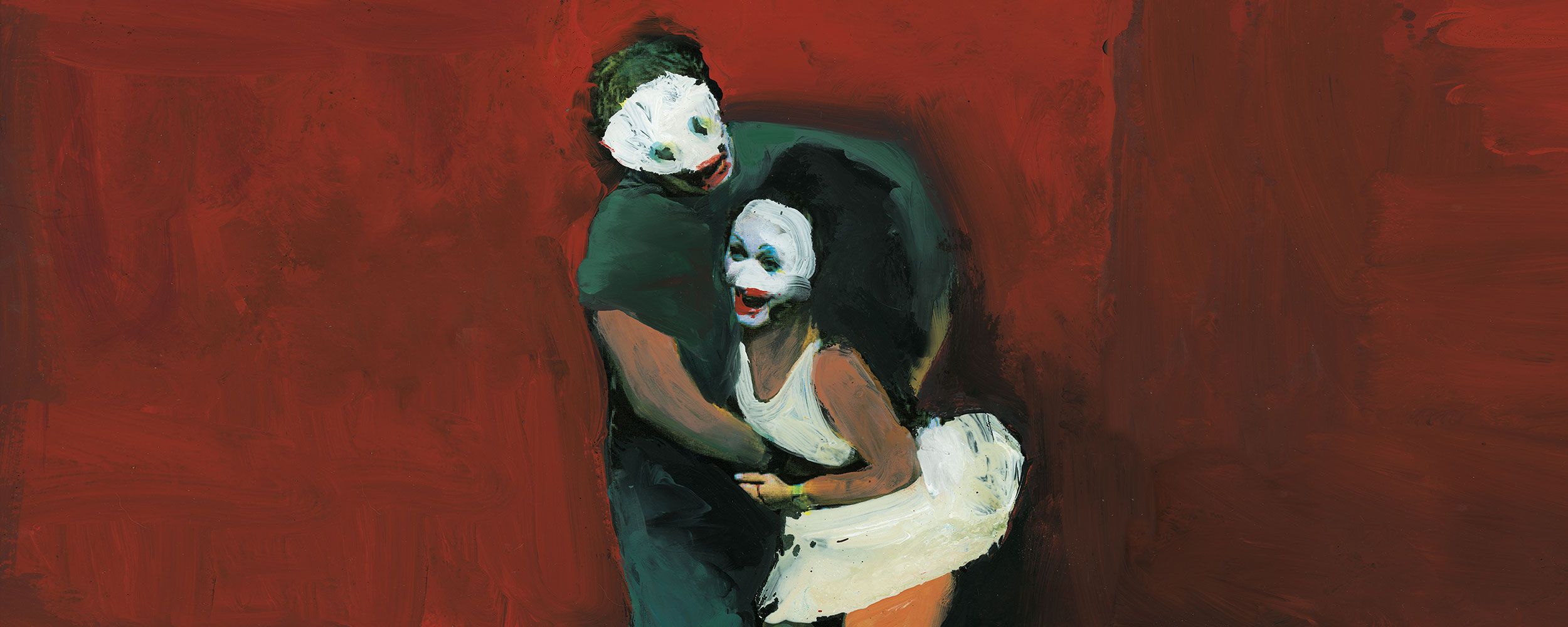
The most beloved of Italian opera returns to the Teatro del Maggio: from 22 February to 3 March 2026, “Pagliacci – Cavalleria rusticana”, the masterpieces by Ruggero Leoncavallo and Pietro Mascagni, will be performed. On the podium of the Main hall, conducting the Orchestra and Chorus of the Maggio and the Children’s Chorus of the Academy, is maestro Riccardo Frizza.
Directed by Robert Carsen.
Production by the Dutch National Opera
The performance on 3 March will be broadcast live on Rai Radio 3
Poster © Gianluigi Toccafondo
Florence, 13 February 2026 – One of the most celebrated and beloved operas of all time returns to the Teatro del Maggio: Pagliacci and Cavalleria rusticana by Ruggero Leoncavallo and Pietro Mascagni. On the podium, leading the Orchestra and Chorus of the Maggio and the Children’s Chorus of the Academy, is maestro Riccardo Frizza, conducting these two masterpieces of Italian “verismo”. The Chorus Master of the Maggio is Lorenzo Fratini. The Children’s Chorus Master is Sara Matteucci.
“It is always a great pleasure to return here to the Maggio and to do so with two further masterpieces such as Pagliacci and Cavalleria,” said maestro Frizza, who returns to the Maggio podium following the great success of Delirio with Jessica Pratt in September 2024 and after staging another verismo gem, L’amico Fritz by Pietro Mascagni, in March 2022. “It is also a privilege to tackle these works alongside Carsen, whose ideas and ‘meta-theatrical’ conception I greatly admire. I am equally delighted to conduct Pagliacci for the first time in my career. As for my interpretation of the two operas, I will strive to remain faithful to the score while accommodating the needs of the singers as much as possible. Pagliacci and Cavalleria are also highly significant titles in the history of the Maggio; I recall, for example, the editions conducted by Bruno Bartoletti, one of the greatest interpreters of this repertoire. For me, it is therefore very important to measure myself against the great names of the past who have conducted these works here in Florence.”
The double bill is directed by Robert Carsen, who also designs the lighting together with Peter van Praet. One of today’s most acclaimed opera directors, Carsen brings to Florence one of his most celebrated productions, first staged at the Dutch National Opera in September 2019. In his vision, Carsen—returning to the Maggio after directing Il ritorno di Ulisse in patria in June 2022, which won the prestigious Premio Abbiati for Best Production of the Year—moves away from a purely historical reconstruction. His interpretation focuses on the concept of “theatre within the theatre,” radically and evocatively linking stage fiction with the real dimension of performance. In this reading, the boundaries between characters, performers and audience become blurred, creating a meta-theatrical experience that raises profound questions about the relationship between art, life and stage identity.
Carsen approaches the two operas through a language of striking visual impact: rather than anchoring the characters’ stories to a specific geographical or historical setting, his dramaturgical project is a scenic investigation of theatre itself, of the relationship between actor and role, and of the fragile boundary between fiction and reality. In this production, the theatre becomes a space for reflection on human destiny, where performance and life intertwine until they merge, highlighting the dramatic tension embedded in the scores. Speaking about his staging, Carsen emphasized the main aspects and the reasons that led him to conceive such a distinctive and evocative production: “As a boy, my parents took me to the theatre to see a play by Luigi Pirandello, Così è (se vi pare). The surprising final revelation of the work was a true epiphany for me, an experience that marked me for life. I was fascinated by Pirandello’s ability to play with different levels of reality and with the audience’s expectations. That early encounter profoundly influenced my work as a director, particularly the concept of the ‘fourth wall,’ which both separates and connects auditorium and stage. In reflecting on the direction of these two operas—both revolutionary for their time—it became clear to me that by reversing the traditional order of performance, the challenge inherent in the Prologue of Pagliacci could extend not only to that opera, but also to Cavalleria rusticana. This new arrangement makes it possible to reinterpret the two works not only through the lens of realism, but also of meta-realism and even super-surrealism.”
In both productions, sets are designed by Radu Boruzescu, lighting by Carsen and Peter van Praet, costumes by Annemarie Woods, and choreography by Marco Berriel.
In Pagliacci, the cast includes Corinne Winters, making her Maggio debut and her role debut as Nedda; Brian Jagde, also making his debut at the Teatro del Maggio, as Canio, the troupe’s leading actor consumed by jealousy for Nedda. Alongside them, Roman Burdenko—returning to the Maggio after Don Carlo in December 2022—is Tonio; Lorenzo Martelli and Hae Kang, both trained at the Maggio Academy, are Peppe and Silvio respectively.
In Cavalleria rusticana, Luciano Ganci—who will return to the Maggio next autumn in Simon Boccanegra—sings Turiddu, and Martina Belli, who previously appeared at the Maggio as Lola in the 2014 autumn Season, makes her debut as Santuzza. Lucia is sung by Manuela Custer, who made her Maggio debut in March 2007 in a concert conducted by Jesús López-Cobos. Roman Burdenko also appears in Cavalleria as Alfio, and Janetka Hoşco completes the cast as Lola.
During the Maggio Seasons, Pagliacci has been staged five times, most recently in September 2019 paired with the contemporary opera Noi, due, quattro by Riccardo Panfili. Cavalleria rusticana has been presented on eleven occasions, most recently in February 2019 paired with Un mari à la porte by Jacques Offenbach. The pairing of these two verismo masterpieces, Cavalleria and Pagliacci, has been presented in this double-bill format only twice before at the Maggio: in 1971 conducted by Riccardo Muti and directed by Mauro Bolognini, and in 2000 conducted by Bruno Bartoletti and directed by Liliana Cavani.
Ticket office

Work with us

Amministrazione Trasparente - Privacy & Cookie policy