
“La bohème” by Giacomo Puccini: from December 20, 2025 to January 4, 2026
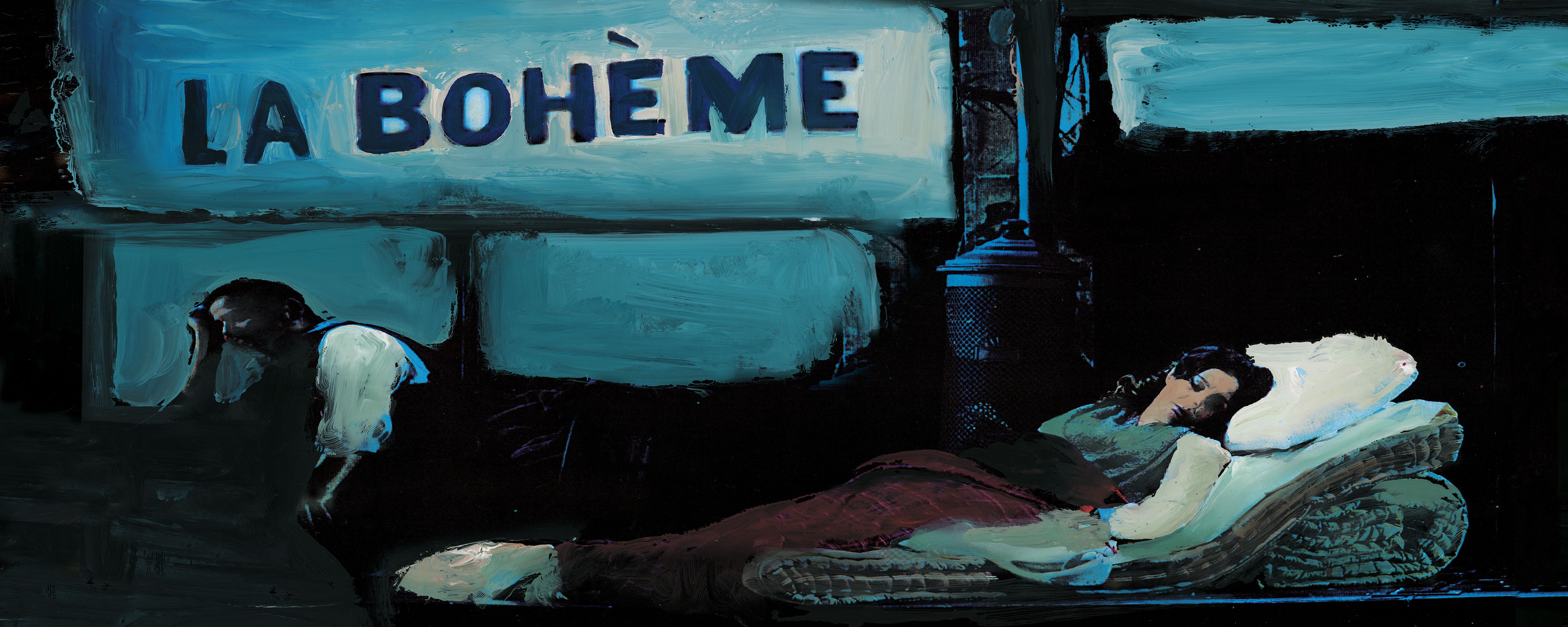
“La bohème” returns to the Teatro del Maggio, one of Giacomo Puccini’s most beloved operas in the entire operatic repertoire.
On the podium, conducting the Orchestra, the Chorus, and the Children’s Chorus of the Accademia del Maggio, is Maestro Diego Ceretta. The production is directed by Bruno Ravella, with the revival direction by Stefania Grazioli.
On stage in the leading roles, Carolina López Moreno and Nombulelo Yende sing Mimì; Long Long and Davide Giusti are Rodolfo; Danylo Matviienko and Francesco Samuele Venuti perform as Marcello; and Mariam Battistelli and Elisa Balbo appear as Musetta.
There are eight performances in total: on December 20, 21, 23, 28, 30, and 31, 2025, and on January 2 and 4, 2026.
Staging by Maggio Musicale Fiorentino
Florence, December 17, 2025 – Two years after the great success of its most recent staging, one of Giacomo Puccini’s most beloved operas, and one of the most cherished works in the entire operatic repertoire, returns to the Teatro del Maggio: La bohème, the masterpiece with a libretto by Giuseppe Giacosa and Luigi Illica, inspired by Henri Murger’s novel Scènes de la vie de bohème.
In the Sala Grande, on the podium conducting the Orchestra, the Chorus, and the Children’s Chorus of the Accademia del Maggio, is Maestro Diego Ceretta, making his operatic debut at the Maggio.
The stage direction, a revival of the production first presented in autumn 2023, is by Bruno Ravella, with revival direction by Stefania Grazioli.
Sets are designed by Tiziano Santi; costumes by Angela Giulia Toso; and lighting, revived by Emanuele Agliati, by D.M. Wood. The Chorus Master is Lorenzo Fratini, and the Children’s Chorus Master of the Accademia is Sara Matteucci.
There are eight performances scheduled: December 20 and 31 at 5:00 pm; December 21 and 28, and January 4 at 3:30 pm; December 23 and 30, and January 2 at 8:00 pm.
On stage is a large, young, and talented cast, alternating across the eight scheduled performances.
Carolina López Moreno—returning to Florence after last year’s triumphs in Madama Butterfly and La traviata—and Nombulelo Yende (performances on December 21, 28, 31 and January 4) sing Mimì; Long Long and Davide Giusti (December 21, 28, 31 and January 4) are Rodolfo; Danylo Matviienko and Francesco Samuele Venuti (December 21, 28, 31 and January 4) perform Marcello; and Mariam Battistelli and Elisa Balbo (December 21, 28, 31 and January 4) appear as Musetta.
The remainder of the cast includes Matteo Loi and Giuseppe Toia (December 21, 28, 31 and January 4) as Schaunard; Manuel Fuentes as Colline; Davide Sodini in the double role of Benoît and Alcindoro; Carlo Messeri and Massimiliano Esposito (December 30, 31 and January 2, 4) as a street vendor; and Alessandro Lanzi and Matteo Tavini (December 30, 31 and January 2, 4) as Parpignol. Completing the cast are Lisandro Guinis and Dielli Hoxha (December 30, 31 and January 2, 4) as the Customs Sergeant and a Customs Officer, respectively, and Nicolò Ayroldi and Egidio Massimo Naccarato (December 30, 31 and January 2, 4).
Diego Ceretta, who returns to the podium of the Sala Grande after conducting Britten’s War Requiem last spring, and who with this title approaches opera for the first time in our Theatre, highlighted the defining features of this production and his interpretation of Puccini’s work:
“The score of La bohème is always a great challenge for a conductor because there are many aspects to consider. For example, the second act is particularly complex, as one must manage a large sound mass: band, chorus, children’s voices, and orchestra, all within dense and highly articulated writing. Even the opening of the first act carries considerable weight. Despite this, from a musical point of view I believe La bohème is the best opera with which a conductor, even a young one, can begin approaching Puccini’s operatic repertoire: it has a freshness and immediacy that ‘ask’ to be allowed to express themselves, without being overly pre-constructed. The same applies to the relationships between the characters,” Ceretta continues, “which are very close not only musically but also on a libretto level. La bohème is built around pairs—Rodolfo and Mimì, Marcello and Musetta, Schaunard and Colline—as well as the friendship that binds the four friends together. My conducting serves precisely this purpose: not to force the relationships, but to make it clear step by step why a character expresses or sings something and why another reacts in a certain way. Everyone knows the opera deeply and has sung it many times; therefore, my work with them mainly consists in opening up new interpretative perspectives.”
The production is a revival of the one first staged in September 2017 and later revived between December 2019, January 2020, and November 2023, always receiving a warm welcome from both critics and audiences. The staging places Rodolfo, Mimì, Marcello, Musetta, and the other protagonists in late-nineteenth-century Paris. The garret of Rodolfo and Marcello, where the first act is set, is simple and essential in its spatial design, while in the second act the scene is dominated by a large, light-filled semicircle, with the skeleton of the garret transforming into the structure of the famous Café Momus. The third act is also simple in structure: the setting at the Barrière d’Enfer consists of a small wooden building, a barrier, and a bench. The sets are carefully designed but not excessively realistic, aiming not to present a photographic portrait of the period but rather to suggest spaces instead of depicting them with literal realism.
Throughout the long history of the Teatro, Puccini’s masterpiece has been among the most frequently performed titles, starting in 1929, the year it was first staged in the Teatro’s seasons. This production marks the thirtieth staging of La bohème at the Maggio, for a total of over 170 performances.

Ticket office

Work with us

Amministrazione Trasparente - Privacy & Cookie policy