Asmik Grigorian in concert: 6th June 2026
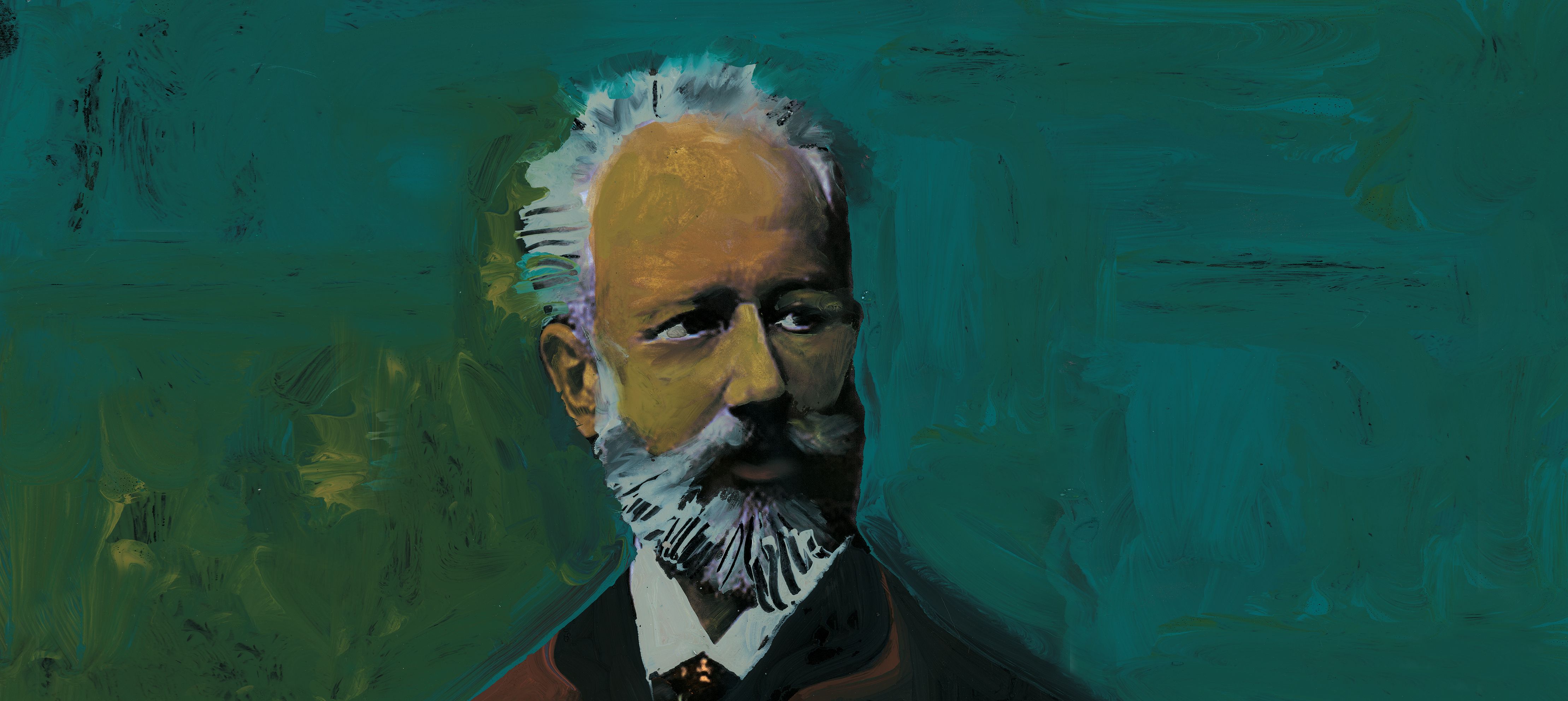
Saturday, June 6, 2026, at 6:00 p.m., in the Mehta Hall of the Teatro del Maggio, soprano Asmik Grigorian and pianist Lukas Geniušas will take the stage for a recital dedicated to the music of Pëtr Il'ič Čajkovskij and Sergej Rachmaninov.
Florence, June 4, 2026 – The concert season of the 88th Maggio Musicale Fiorentino Festival continues with a recital in the Teatro del Maggio’s Mehta Hall on Saturday, June 6 at 6:00 p.m., featuring soprano Asmik Grigorian and pianist Lukas Geniušas.
The program offers a journey through the great tradition of Russian art song, presenting a selection of romances by Pëtr Il'ič Čajkovskij and Sergej Rachmaninov. The first half of the evening is devoted to Čajkovskij and includes Amid the Din of the Ball, Again, as Before, I Am Alone, None but the Lonely Heart, A Tear Trembles, I Bless You, Forests, and Do Not Ask. Alongside these vocal works, the program features two piano pieces by the composer: the Humoresque, Op. 10 No. 2, and the Scherzo humoristique, Op. 19 No. 2.
The second half is dedicated to the music of Sergej Rachmaninov and includes In the Silence of the Mysterious Night, Do Not Sing to Me, My Beautiful One, Little One, You Are Like a Flower, Dream, Spring Waters, Oh, Do Not Be Sad, I Wait for You, Twilight, How Fair This Place Is!, We Shall Rest, and Dissonance. The program is completed by two piano works: the Prelude in G-sharp Minor, Op. 32 No. 12, and the Prelude in D-flat Major, Op. 32 No. 13.
Returning to the Teatro del Maggio following the great success of her symphonic concert with Maestro Zubin Mehta in October 2021, Asmik Grigorian has been described by The New York Times as “one of the most riveting dramatic talents in opera today.” The Lithuanian soprano is a regular presence at many of the world’s leading opera houses and has recently appeared at the Wiener Staatsoper, the Metropolitan Opera, the Salzburger Festspiele, and Teatro alla Scala. A founding member of the Vilnius City Opera, she was named Best Female Performer at the Austrian Music Theater Awards in 2019, Opera Singer of the Year by Opera XXI in 2022, and Singer of the Year at the Opus Klassik Awards in 2023. In 2024, she received the prestigious Österreichischer Musiktheaterpreis in the Special Jury Prize category, honoring exceptional contributions to Austria’s theatrical and operatic scene. In 2025, she was also awarded the Der Faust theatre prize for her acclaimed portrayal of Salome at the Hamburgische Staatsoper.
Lukas Geniušas has established himself as one of the most gifted pianists of his generation. Praised for his “brilliance and maturity” (The Guardian), he performs recitals in some of the world’s most prestigious venues, including Wigmore Hall in London, the Concertgebouw in Amsterdam, Salle Gaveau in Paris, The Frick Collection in New York, and the Elbphilharmonie in Hamburg. He is a regular guest at major international festivals such as the Gilmore Piano Festival, the Verbier Festival, La Roque d’Anthéron, the Ruhr Piano Festival, Schloss Elmau, and the Lockenhaus Festival. He also collaborates with leading symphony orchestras, including The Philadelphia Orchestra, the Toronto Symphony Orchestra, the NHK Symphony Orchestra, the Singapore Symphony Orchestra, and the Orchestre de Paris.
The concert
Originally intended for domestic performance and designed to entertain aristocratic salons, the vocal chamber romance assumed a prominent role in many countries during the nineteenth century. The salon was one of the preferred gathering places for musicians, composers, and artists of all kinds, who met there not only to perform and listen to music but also to discuss art, poetry, and philosophy. In this context, Russia’s contribution to vocal chamber music is particularly noteworthy. Lacking a native tradition in the genre, Russian composers initially drew inspiration from Western models before developing a national school capable of producing works of undeniable charm. Following the pioneering achievements of Musorgskij and the other composers of the Group of Five in the field of vocal chamber music, Čajkovskij also embraced the genre, composing more than one hundred romances throughout his career on texts drawn from great Russian poetry as well as from German poets such as Heine and Goethe.
The cycle 6 Romances, Op. 6, dates from 1870 and includes A Tear Trembles (No. 4), on a text by Tolstoj, and None but the Lonely Heart (No. 6), on a text by Goethe, both works highlighting the composer’s well-known lyrical and sentimental vein. The third of the 6 Romances, Op. 38, composed in 1878, Amid the Din of the Ball, describes, in the rhythm of a melancholic waltz, the experience of falling in love with someone encountered at a dance party. The collection Op. 47, dating from 1881, includes I Bless You, Forests (No. 5), a kind of pantheistic hymn inspired by the enchantment of nature. Čajkovskij returned to Goethe for the third romance of Op. 57 (1884), Do Not Ask, a poignant and despairing page that tells of a secret to be guarded jealously. His final song cycle, the 6 Romances, Op. 73, was composed in 1893 on texts by the young amateur poet Daniil Rathaus. The concluding romance, Again, as Before, I Am Alone, stands out for its sombre and resigned atmosphere, underscored by an insistent rhythmic figure in the piano.
At the end of the nineteenth century, Sergej Rachmaninov also produced a substantial body of chamber romances—around eighty in total—to which he devoted himself primarily during the first two decades of his compositional career. The Romances, Op. 4, completed in 1890, constitute his first collection in the genre. In the third song, In the Silence of the Mysterious Night, the voice is accompanied by a gently rocking and passionate piano melody that intensifies the depiction of nocturnal love, while the fourth, Do Not Sing to Me, My Beautiful One, is profoundly poignant, with voice and piano united in a shared emotional outpouring. Both set to texts by Heine, Little One, You Are Like a Flower and Dream belong to the collection published as Op. 8 in 1893, while I Wait for You and Spring Waters are included in Op. 14, published three years later. The former is a page of intense passion culminating in a piano solo, whereas the latter, the eleventh romance of the collection, is a song that joyfully and impetuously celebrates the arrival of spring.
The romances Twilight (No. 3) and How Fair This Place Is! (No. 7), from Op. 21, belong to the early years of the twentieth century and portray nature as a refuge—the only place where a wounded soul can find peace. The collection 14 Romances, Op. 34 (1912), dates from the period when Rachmaninov was at the height of his career as a composer, virtuoso pianist, and conductor. Op. 34 represents not only one of the peaks of his vocal output but also the final chapter of his profound connection with the language and poetry of his native land. Five years later, permanent exile from Russia would sever that bond forever, and Rachmaninov would never compose another romance. Dissonance, the penultimate song of the collection, is a genuine outpouring of the soul, in which tonal instability musically conveys the inner torment caused by the end of a love affair.