Maggio Metropolitano celebrates its tenth anniversary: a decade of music and beauty across all 41 municipalities of the Florentine area
Presented at Palazzo Medici Riccardi, the 10th edition of the festival: as with every edition, the 2026 program once again includes over 100 events, ranging from chamber music excellence to lecture-concerts, performances for children and schools, and open rehearsals.
The initiative confirms itself as a cultural infrastructure capable of breaking down boundaries and bringing theatre back to the center of the community.
Florence, March 17, 2026 – Ten years of journeys, of music spread across squares, churches, and provincial theatres, but also courtyards, libraries, cinemas, and schools: a bond that continues to grow stronger between the Fondazione del Teatro del Maggio Musicale Fiorentino and its territory.
Today, in the Sala Pistelli of Palazzo Medici Riccardi, in the presence of the Mayor of Florence, the Metropolitan City, and President of the Fondazione del Maggio, Sara Funaro, and the Superintendent Carlo Fuortes, the tenth edition of the Maggio Metropolitano is presented: the project funded by the Metropolitan City of Florence that brings artistic excellence throughout all 41 municipalities in the area.
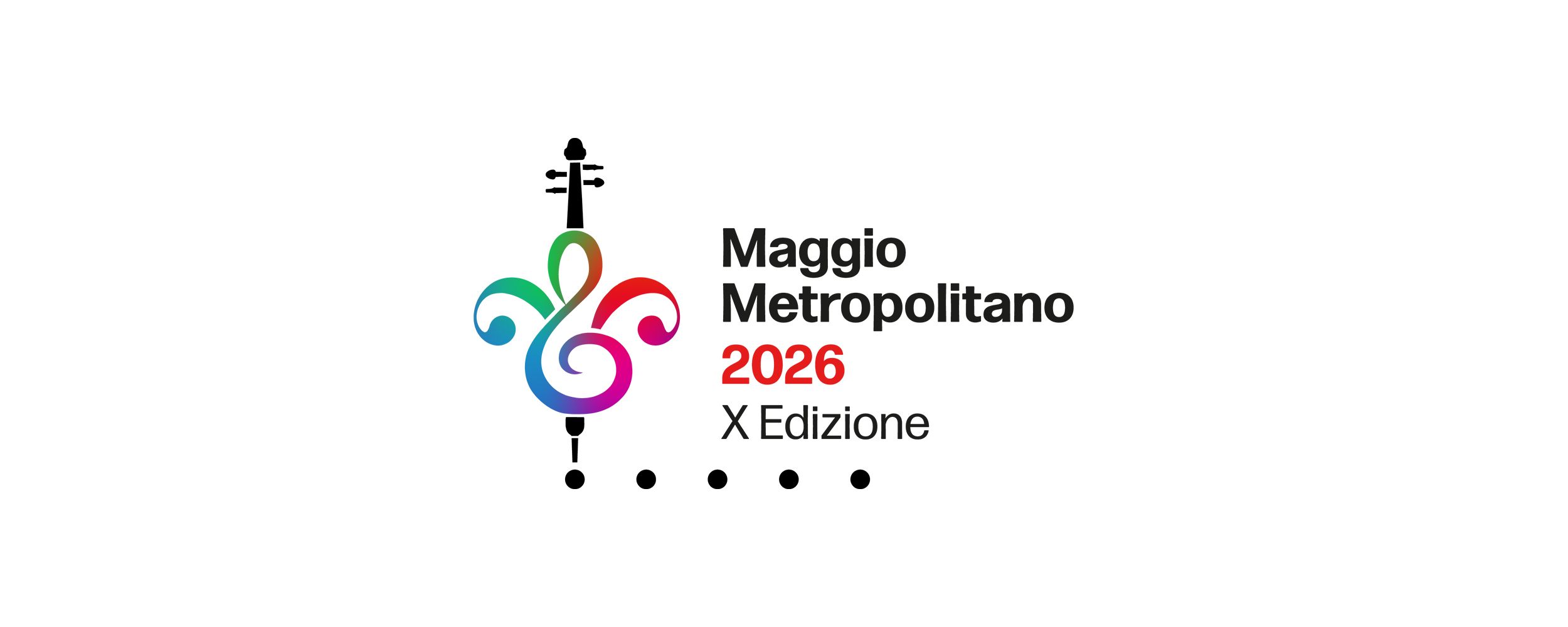
This ten-year milestone is accompanied by a new logo that refreshes its visual identity: bidding farewell to the historic van with a suitcase on its roof, the festival adopts a more incisive and modern graphic symbol. The new emblem blends art with a sense of belonging: the body of a cello takes the shape of a lily, a historic and globally recognizable symbol shared by Florence, the Metropolitan City, and the Maggio. The instrument’s endpin points strategically to five locations, symbolizing the five areas (Chianti, Florentine Belt, Empolese-Valdelsa, Mugello, Valdarno-Valdisieve), visually evoking the unbreakable bond between music and the roots of the territory.
With a strong focus on artistic excellence, the Maggio Metropolitano represents an essential condition for the widespread dissemination of musical culture. The cultural offering—the heart of the project—aims to cover over 3,500 square kilometers of metropolitan territory, providing a potential audience of one million residents across the 41 municipalities, including Florence, with opportunities for connection and performances “within reach,” right in the heart of their communities, while maintaining the highest standards of quality in every production.
Over time, this festival has become a well-established and highly appreciated cultural infrastructure, capable of breaking down both physical and symbolic boundaries between center and periphery. The project’s widespread reach transforms the entire metropolitan area into a single organism, where music becomes a tool for social cohesion and belonging, bringing the prestige and international value of the Maggio directly to every citizen’s doorstep—“within reach,” indeed.
Mayor Sara Funaro stated: “There is great vitality, and the Maggio Metropolitano virtuously sets the notes of great composers onto the staff of the territory. As we work to promote sustainable mobility to bring the metropolitan city closer together, we also enhance the wealth of theatres, venues, associations, and schools that dot the area, where a passion for music is passed on—making it part of everyday life, while also showcasing it during moments when communities come together or invite visitors to experience their best. Everything comes together in this beautiful composition that is the Metropolitan City of Florence.”
Superintendent Carlo Fuortes emphasized: “Celebrating ten years means honoring a true civic pact. The Maggio Metropolitano proves that excellence knows no periphery: our goal is to place our Theatre at the center of community life, bringing the history and professionalism of the Maggio beyond the building itself, making it a shared and accessible heritage for the entire Florentine area. It is an integral part of our ethical and cultural mission. I am pleased to highlight the great success of the meetings and lecture-concerts by the Orchestra members and Choir artists, introduced last season and repeated this year, demonstrating the strong interest of an engaged and curious audience, as well as the musicians’ willingness to share the secrets of their craft. I would also like to emphasize not only the work of the artists who bring the Maggio Metropolitano season to life through music, singing, acting, and words, but also the less visible work of stagehands, technicians, electricians, seamstresses, and sound engineers who support every scheduled event thanks to the organizational “machine” of our Theatre. I thank everyone, because it is through their commitment that the success of this project is so broad and shared. I also wish to thank Mayor Funaro and the Metropolitan City for their concrete support, and all the municipalities for their interest in us and our proposals.”
In every edition, the festival has been structured around pillars that combine entertainment and advanced training, and these remain central in this anniversary edition: lecture-concerts and chamber music, with dozens of highly successful and engaging events where Orchestra members and Choir artists not only perform pieces but explain their historical context, offering practical demonstrations and direct interaction with instruments; concerts by the artists of the Accademia del Maggio, young talents who showcase the operatic repertoire; performances by Venti Lucenti by Manu Lalli, a long-running and widely acclaimed series focused on the power of theatre for younger audiences, which this year—after productions dedicated to figures such as Mozart, Rossini, Beethoven, Puccini, Dante, and Donizetti—will bring back the Verdi Game, a highly successful participatory show combining prose and opera, featured in the 2022 and 2023 editions; and open rehearsals of opera productions and symphonic concerts, which over the years have allowed thousands of citizens to visit the Maggio and discover the complex and fascinating collective work behind the scenes.
Across eight previous effective editions (excluding the pandemic suspension), the festival has had a significant territorial impact: over 35,000 kilometers traveled to reach every municipality at least once—often with complex logistics—without ever compromising the very high standards of a journey that has connected the Theatre to each individual community through more than 800 events offered free of charge. The Maggio thus consolidates its role as a strategic partner for local administrations, collaborating with great satisfaction, ensuring that even the most remote municipalities can enjoy the dignity of a major stage, and acting as a driving force for the cultural promotion of the entire “diffuse city,” reaffirming that the mission of music and the Maggio is to unite, move, remain in motion, and live in constant dialogue with every corner of the metropolitan area.
The tenth edition, already launched on February 16, maintains the established rhythm of previous seasons: for the February–April quarter, 26 events are scheduled—including 9 lecture-concerts, 2 chamber concerts, one Accademia concert, and 14 performances of the Verdi Game—reaching 15 municipalities: Vaglia, Pratolino, Lastra a Signa, Bagno a Ripoli, Fiesole, Barberino, Dicomano, Montespertoli, Rufina, Rignano, Figline, Londa, Pontassieve, and Borgo San Lorenzo (with multiple performances in several locations).
During the summer months and the subsequent Christmas period, the program will become even more extensive. For the May–July quarter, 42 events are already planned across 21 municipalities (Calenzano, Campi Bisenzio, Bagno a Ripoli, Reggello, Greve in Chianti, Fucecchio, Marradi, Barberino, Lastra a Signa, Castelfiorentino, Pelago, Sesto Fiorentino, Pontassieve, Rufina, Montespertoli, San Casciano, Firenzuola, San Godenzo, Palazzuolo sul Senio, and Fiesole), offering a rich program ranging from meetings with Orchestra and Choir artists to performances by Accademia talents, as well as concerts by the Children’s Choir and chamber music.
The calendar is constantly evolving: programs are continuously updated to accommodate new requests from local administrations, combining them with the artistic excellence proposed by the Maggio.