The Maggio at the Terme Tettuccio in Montecatini on 3 July 2026 with Carl Orff's "Carmina Burana"
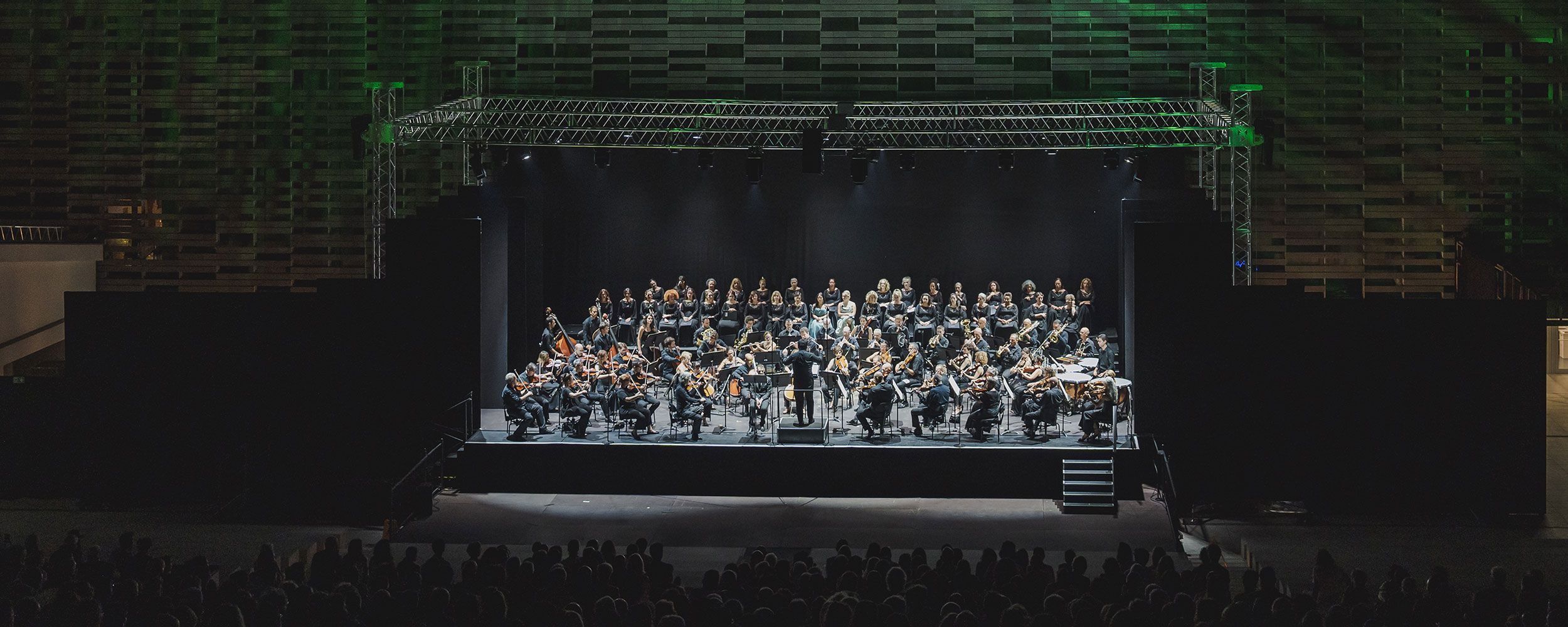
Friday, 3 July 2026, at 9.30 p.m., at the Terme Tettuccio in Montecatini Terme, the Teatro del Maggio presents Carl Orff's Carmina Burana in the version for chorus, two pianos and percussion.
The Coro del Maggio Musicale Fiorentino and the Children's Chorus of the Accademia del Maggio Musicale Fiorentino are conducted respectively by Lorenzo Fratini and Sara Matteucci.
The soloists are Aloisia de Nardis, Marco Ciaponi and Roberto De Candia.
At the piano: Leonardo Andreotti and Andrea Severi.
Percussion: the percussionists of the Orchestra del Maggio Musicale Fiorentino.
Florence, 2 July 2026 – One year after the concert conducted by Zubin Mehta, the Teatro del Maggio returns to Montecatini Terme for the Montecatini Terme UNESCO Arts Festival. On Friday, 3 July at 9.30 p.m., in the forecourt of the historic Terme Tettuccio, the celebrated Carmina Burana by Carl Orff will be performed in the version for chorus, two pianos and percussion.
The performers are the Coro del Maggio Musicale Fiorentino and the Children's Chorus of the Accademia del Maggio Musicale Fiorentino, conducted respectively by Lorenzo Fratini and Sara Matteucci, together with the percussionists of the Orchestra del Maggio Musicale Fiorentino. The performance is conducted by Lorenzo Fratini.
The soloists are Aloisia de Nardis, Marco Ciaponi and Roberto De Candia, with Leonardo Andreotti and Andrea Severi at the piano.
The Maggio returns to the Tettuccio one year after its previous appearance, renewing a relationship that spans almost a century. Both institutions were founded in 1928 and immediately began collaborating, establishing a long-standing artistic partnership. In its early years, the Orchestra del Maggio played a central role in Montecatini's summer seasons; although less frequent in later decades, the Teatro del Maggio has appeared at the Tettuccio on around one hundred occasions, presenting symphonic concerts, ballet performances and an opera production. This presence is part of the shared history of both the Teatro del Maggio and Montecatini Terme, and continues today thanks to the common commitment to preserving and developing a cultural dialogue built over generations.
On this occasion, General Director Carlo Fuortes said:
“The concert on 3 July fits naturally within this shared vision, which I fully share with Mayor Claudio Del Rosso, whom I would like to thank. We felt that Carmina Burana, with its extraordinary communicative power, presented in its essential version for chorus, pianos and percussion - yet still magnetic, rhythmic and deeply engaging - was the ideal choice to bring the people of Montecatini, both residents and visitors, together through music. The Tettuccio provides the perfect setting for Carmina Burana, not only because of its remarkable beauty, but also because a twentieth-century masterpiece is performed in a venue that is itself a landmark of twentieth-century Italian culture, where music is not an addition but an integral part of the site's original conception.”
Returning to the Tettuccio," concluded the General Director, "means much more than presenting a concert. It means renewing a shared history and a long-standing tradition; it means recognising the value of an extraordinary place and reaffirming a principle that has guided the Maggio since its beginnings: great music flourishes when it encounters beauty, history and the communities that preserve them."
“Carmina Burana”
Among the best-known compositions of the twentieth century, Carmina Burana, written by Carl Orff between 1935 and 1936, is a scenic cantata based on 24 poems selected from the medieval manuscript collection of the same name dating from the thirteenth century. The work is structured in a prologue, five sections and a finale. The Prologue, Fortuna Imperatrix Mundi ("Fortune, Empress of the World"), opens with the celebrated O Fortuna. It is followed by the first section, Primo Vere ("In Spring"), celebrating the joyful spirit of spring; the second, Uf dem Anger ("On the Green"), which includes texts in Middle High German; the third, In Taberna ("In the Tavern"), inspired by the unruly world of the clerici vagantes, gambling, drinking and feasting; the fourth, Cour d'Amours ("The Court of Love"), devoted to the theme of love; and the fifth, Blanziflor et Helena ("Blanchefleur and Helen"), which brings the love songs to their conclusion. The work closes with the reprise of Fortuna Imperatrix Mundi, returning to the opening chorus and completing the cantata's cyclical design.