"Giulio Cesare in Egitto" di Händel, dal 14 al 25 giugno
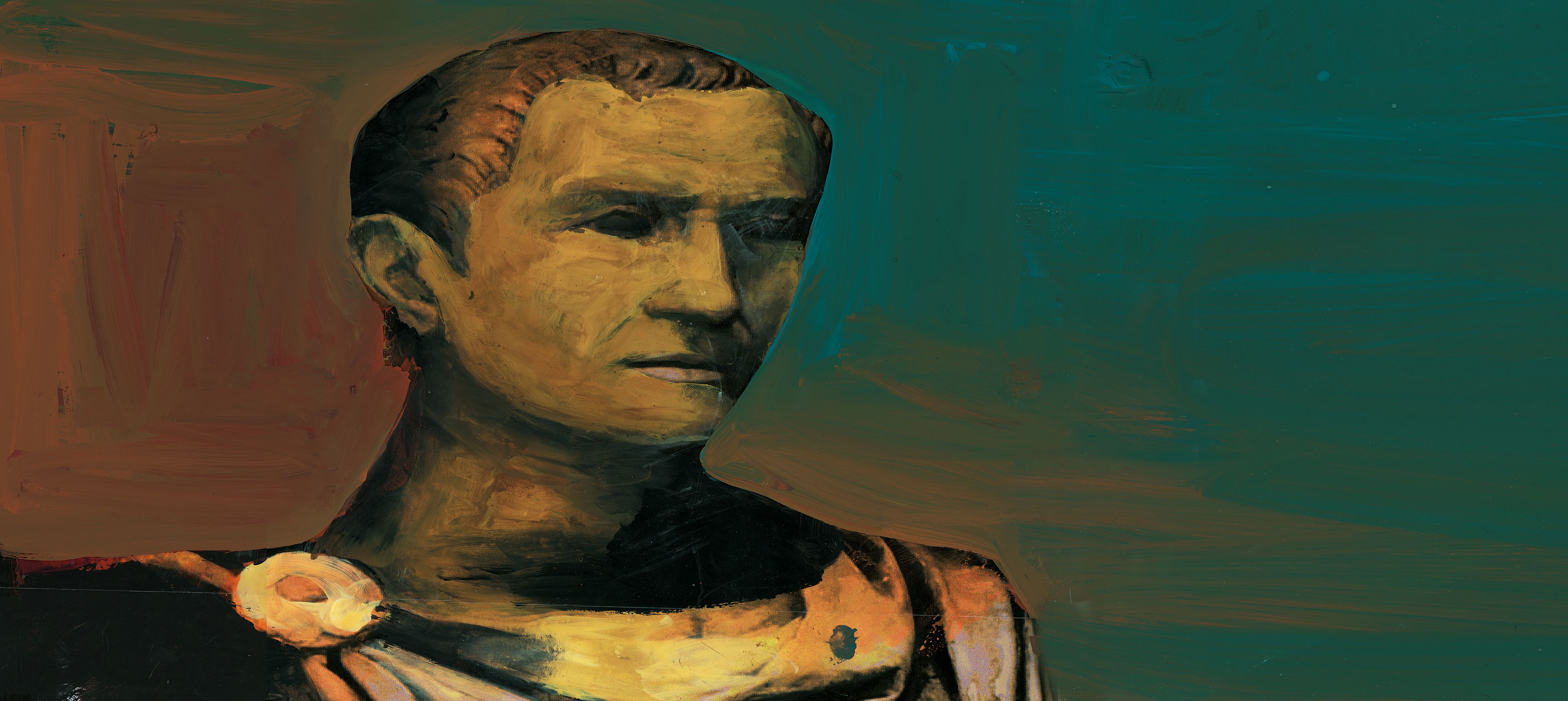
Final opera in the programme of the 88th Maggio Musicale Fiorentino Festival
The 88th Maggio Musicale Fiorentino Festival concludes its operatic programme with one of the great masterpieces of Baroque musical theatre: from 14 to 25 June, the Teatro's Main Hall will host Giulio Cesare in Egitto by Georg Friedrich Händel, performed in Florence for the very first time.
On the podium, conducting the Orchestra and Chorus of the Maggio Musicale Fiorentino, is Gianluca Capuano; director: Davide Livermore.
The Chorus Master is Lorenzo Fratini.
Staged by Opéra de Monte-Carlo
Poster © Gianluigi Toccafondo
The performance on 25 June will be broadcast live on Rai Radio 3.
Florence, 8 June 2026 – The operatic programme of the 88th Maggio Musicale Fiorentino Festival draws to a close with one of Georg Friedrich Händel’s most celebrated works, Giulio Cesare in Egitto, presented for the first time ever in Florence, in the Teatro's Main Hall.
Four performances are scheduled: 14 June at 5 p.m., 19 June at 7 p.m., 21 June at 3.30 p.m., 25 June at 7 p.m.
Conducting the Orchestra and Chorus of the Maggio Musicale Fiorentino is Gianluca Capuano, while the production is directed by Davide Livermore. The Chorus Master is Lorenzo Fratini.
The sets are designed by Giò Forma, costumes by Mariana Fracasso, lighting by Antonio Castro, and video design by D-Wok.
In the title role, Raffaele Pe stars as Julius Caesar. He is joined by Mariangela Sicilia as Cleopatra, Fleur Barron as Cornelia, Nicolò Balducci as Sesto Pompeo, Filippo Mineccia as Tolomeo, and Valerio Morelli as Achilla. Completing the cast are Davide Sodini as Curio and Janetka Hoşco as Nireno.
A masterpiece of the Baroque repertoire, Giulio Cesare in Egitto premiered at London’s King’s Theatre on 20 February 1724. At the time, Händel was the most highly regarded composer in England and director of the Royal Academy of Music, which had been successfully promoting Italian opera in London since 1719. This three-act dramma per musica, with a libretto by Nicola Francesco Haym, was greeted with tremendous acclaim and followed by thirteen sold-out performances.
The opera is based on the historical episode of Caesar’s campaign in Egypt as he pursued his rival Pompey after the Battle of Pharsalus. In Egypt, Caesar encounters the cunning and treacherous King Tolomeo and the captivating Cleopatra, who initially seeks to seduce him for political advantage before genuinely falling in love with him. The work embodies all the marvels of Baroque opera: an exceptional cast - originally including the celebrated castrato Senesino as Caesar and soprano Francesca Cuzzoni as Cleopatra - a lavish and spectacular staging, and music of extraordinary refinement and craftsmanship. Within the alternation of recitatives and arias typical of eighteenth-century opera, Giulio Cesare contains some of Händel’s most admired pages, including the accompanied recitative “Alma del gran Pompeo”, sung by Caesar before the urn containing the ashes of his murdered enemy Pompey.
Speaking about the opera’s musical and dramatic core, Gianluca Capuano - returning to the Maggio after conducting another major Händel work, Alcina, in October 2022 - emphasised the central role of the affetti, the emotions and passions that find precise expression in the music: “From the very beginning, the impact of the music is extraordinarily powerful, almost like a slap in the face to the audience. The opera opens with overwhelming momentum: after the overture comes a grand celebratory chorus extolling Caesar’s triumph, but the atmosphere changes immediately with the appearance of Pompey’s severed head, transforming exaltation into a desire for revenge and fury. This brutality resurfaces throughout the work, for example when Caesar receives a death threat. The music symbolically forces him to flee: to remain would mean certain death. The choice of keys also helps define the characters. Caesar’s entrance aria is in D major, a heroic and radiant key which, according to the doctrine of the affections, represents victory, strength and self-confidence. Cornelia, by contrast, is portrayed by Händel with deeply melancholic colours. I often say that Händel was the Shakespeare of music. His music possesses the same narrative and dramatic power as the works of the great English poet, and the psychological depth with which he shapes his characters rivals that of Shakespeare himself. Through music, Händel conveys the inner conflicts, passions and contradictions of his protagonists with extraordinary theatrical intensity.”
In Davide Livermore’s vision, the action is relocated to the 1930s and draws openly on the imagery of the great adventure and mystery novels set in Egypt. At the centre of the story is a luxurious steamship sailing along the Nile—significantly renamed Tolomeo—where power struggles, seductions, betrayals and unexpected twists unfold. The staging combines visual elegance with a strong focus on the psychological dimension of the characters. Alongside dramatic tension, there is room for irony and genuine theatrical amusement: some of the opera’s most famous arias become cabaret-style numbers, naturally integrated into the narrative and illuminating the protagonists’ emotional nuances.
The result is a production rich in theatrical invention, where the fascination of Baroque opera engages in dialogue with the language of cinema and contemporary theatre: “The myth of Cleopatra and Caesar has fascinated humanity for millennia,” says Livermore. “We return to it again and again, retelling and transforming it, dressing it in different garments according to the times. In Giulio Cesare in Egitto, Händel approaches it not as a historian but as a great man of the theatre. The myth becomes a perfect machine of appearances, misunderstandings, seductions, plot twists and profoundly human fragilities. The characters are complex, multifaceted and full of contradictions. Händel’s Caesar has many dimensions: ruler, military leader, tyrant, lover and friend. Cleopatra is no less complex: she seduces, calculates, invents and manipulates, yet she is also capable of exposing herself and taking risks. Both are masters of the art of performing power. In my production, all this unfolds like a 1920s thriller on the banks of the Nile. There is sunshine, water, luxury, light-coloured clothing, terraces, long shadows and overly courteous smiles. Yet beneath this glittering surface, blood is flowing. The imagery is close to that of Agatha Christie’s Death on the Nile: a refined microcosm, apparently civilised, where everyone watches everyone else, everyone lies a little, and almost no one is innocent. The central question becomes: who killed Pompey? Or rather, who truly wanted him dead? As in an Agatha Christie novel, many hands may have contributed to the crime. Responsibility never belongs to one person alone. It is shared, elegant, diplomatic, almost worldly. And on the journey towards the truth, another character, Achilla, dies on stage, as though the initial death inevitably generates another. The love story between Cleopatra and Caesar envelops this inner drama like a great glass bell. Their fragile balance becomes the point of reference for all the other characters. The conflict between Rome and Egypt is reflected in their relationship: two worlds that attract, observe, seduce and fight each other.”