From March 14 to 22, the operas "Bluebeard’s Castle by Bartók and La voix humaine by Poulenc will be staged.
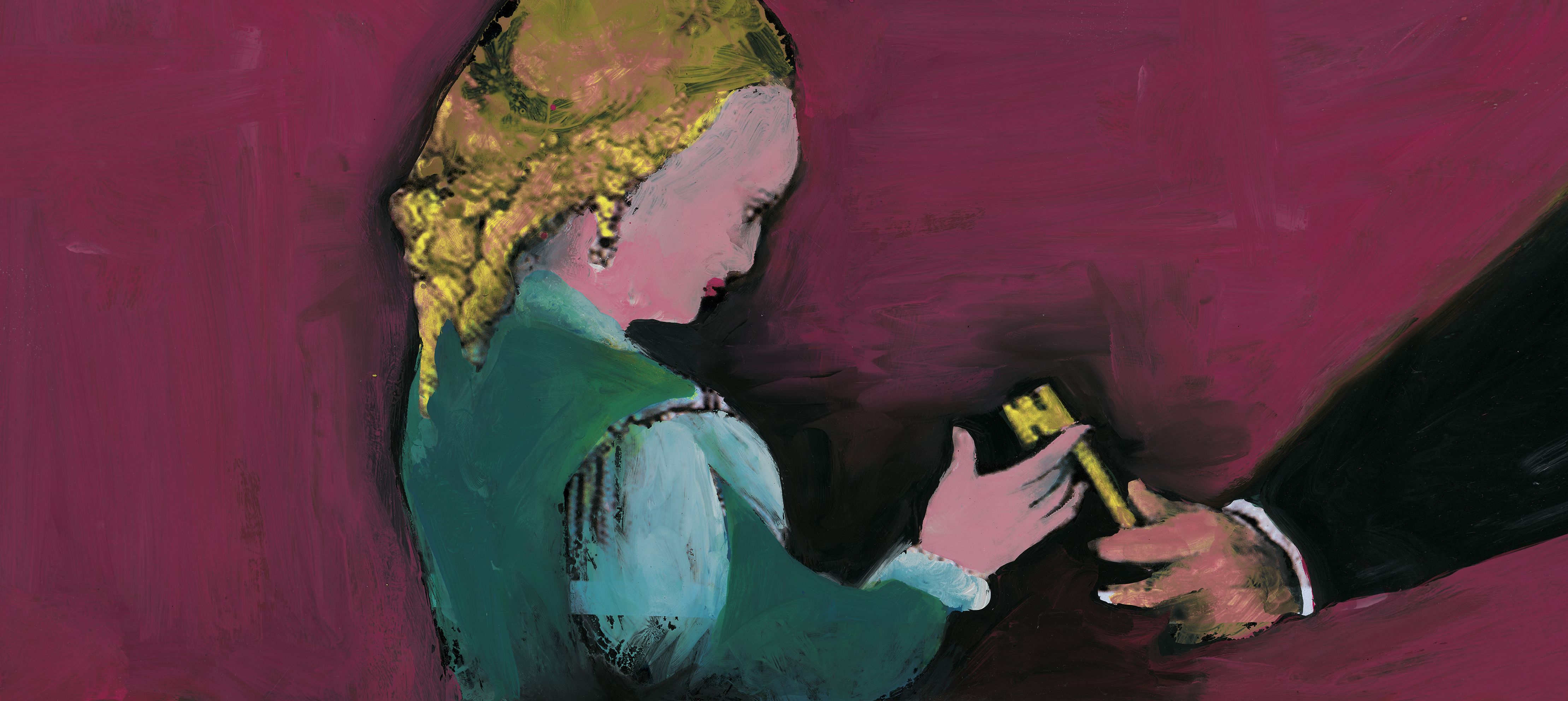
From March 14 to 22, 2026, the Main hall of the Teatro del Maggio Musicale Fiorentino will host the operas Bluebeard’s Castle by Béla Bartók and La voix humaine by Francis Poulenc.
On the podium is Martin Rajna, with staging by Claus Guth.
On stage are Florian Boesch and Christel Loetzsch in Bluebeard’s Castle, and Anna Caterina Antonacci in La voix humaine.
This is a new production in co-production with the Tiroler Festspiele Erl.
Florence, March 11, 2026 – After the great success of Pagliacci and Cavalleria rusticana, the Teatro del Maggio Musicale Fiorentino presents: Bluebeard’s Castle by Béla Bartók and La voix humaine by Francis Poulenc. The two works will be staged in the theatre’s Main hall on March 14 at 5 p.m., March 18 at 8 p.m., and March 22 at 3:30 p.m.
Conducting the Orchestra del Maggio Musicale Fiorentino is Martin Rajna. The production is directed by Claus Guth - making his debut at the Maggio - in a new staging created in co-production with the Tiroler Festspiele Erl. The creative team also includes Monika Pormale (sets), Anna Sofia Tuma (costumes), and Michael Bauer (lighting).
The vocal cast features Florian Boesch as Bluebeard and Christel Loetzsch as Judith in Bluebeard’s Castle, while in La voix humaine the role of the protagonist, Elle, is performed by Anna Caterina Antonacci.
After the interval, before La voix humaine, the third movement of Bartók’s concerto will be performed as an entr’acte.
Composed in 1911 to a libretto by the poet, director, and screenwriter Béla Balázs, and first performed seven years later, in 1918, at the Budapest Opera House, Bluebeard’s Castle is the only opera by Béla Bartók. The work, in a single act, unfolds as an intense psychological dialogue between its two protagonists: Bluebeard and his new bride Judith. Set in the prince’s dark and mysterious castle, the opera follows the gradual discovery of the secrets hidden behind the seven doors of the residence, which Judith insists on opening one by one. In this symbolic and unsettling journey, Bartók’s music - rich in timbral suggestions and references to Hungarian folk tradition - accompanies an inner drama shaped by the desire for knowledge, fear, and solitude.
Completing the double bill is La voix humaine, a one-act lyric tragedy by Francis Poulenc based on a text by Jean Cocteau, first performed in 1959 at the Théâtre national de l’Opéra-Comique in Paris. The work is structured as an intense monologue: the only character on stage, Elle, speaks on the telephone with the man who has just left her. Through a fragmented conversation filled with silences, interruptions, and sudden changes of tone, the protagonist’s emotional collapse gradually emerges.
Over the course of the Teatro del Maggio Musicale Fiorentino seasons, Bluebeard’s Castle has been performed a total of ten times, while La voix humaine has been staged on three occasions.
Speaking about his staging and dramaturgical concept, Claus Guth emphasized not only the psychological dimension but above all the symbolic aspect underlying the two works:
“My desire has always focused on how these two titles could be brought together. For instance, in La voix humaine, a truly extraordinary opera, it has always troubled me that the woman’s role is confined to that of a mere victim, and in the world of opera I believe we must find a way to move away from this ‘tradition’. I therefore tried to develop a new story linking the two works, in which we find an act of revenge against the terrifying figure of Bluebeard, who in the end will be killed by the woman from La voix humaine. This idea allowed me to unite the two stories as if we were inside a real ‘crime story’, while at the same time developing the psychological evolution of the narrative.
When I was fourteen, I remember hearing a recording of Bluebeard’s Castle, and from the very first chords I was deeply struck. Starting from the prologue, we understand that we must not take what we see and hear literally, but rather interpret it symbolically. Take, for example, Bluebeard’s famous doors: I will not show them directly, but suggest how they can symbolically ‘open’ something. It is also important to focus on the relationship between man and woman, which unfolds in a scenario that is simultaneously a context of both war and love. The production also refers to how much of ourselves we can reveal without being hurt: both protagonists have already experienced many relationships and are therefore very cautious about opening up to another person. For me, it is as if we are exploring a study of human relationships, rather than telling a distant story about two people in a remote castle. Each member of the audience will be able to recognize, in one nuance or another, what the protagonists say and feel; this makes the story far more realistic. I therefore sought an interpretation that could somehow connect the small ‘stories’ of each of us with all of this.
La voix humaine is another masterpiece of introspective analysis of the human soul: a person wounded and traumatized by a relationship. She remains, for example, clinging to the telephone, giving the impression that everything is normal and perfect, but it is clear that before our eyes stands a devastated woman. In my interpretation she will return to the man who destroyed her and turned her into this terrible victim in order to take revenge; in this way the story linking the two works is brought to a close. It is a wonderful opportunity to be here for the first time in Florence, in this magnificent theatre—a place that perfectly suits these two operas, allowing us to focus on the soul of their stories.”
The relationship between the two works is therefore not only narrative but also musical, as Martin Rajna explained in his analysis for the program booklet:
“In this opera, Bartók not only forged his own operatic musical language—a result significantly influenced by his early encounters with contemporary opera, particularly Salome and Elektra by Richard Strauss—but also introduced a radically different thematic focus. Instead of national or historical subjects, Bluebeard’s Castle places the individual’s inner drama and psychological conflict at the center of the stage. From a musical standpoint, the opera is clearly structured, since the seven doors that play a central role in the narrative are delineated with striking clarity.”
“Poulenc, on the other hand, inscribed his own personal crisis into La voix humaine,” Rajna continued. “By virtue of its dramatic premise—a telephone conversation heard from only one side—the work conveys its central theme in a uniquely powerful way: immeasurable solitude. The musical structure of Poulenc’s opera is distinctive. Although the dramatic text functions as the main organizing force, Wagnerian gestures can be perceived at the level of motifs. At certain moments, the orchestra speaks in place of the singer; the text occasionally conveys a meaning contrary to the music; and specific motifs are associated with the protagonist’s emotional states and the deeper semantic layers of the work. Unlike Bartók’s opera, which employs a vast orchestral apparatus, Poulenc assigns a relatively small orchestra to accompany the soloist. This does not imply any lack of richness in the orchestration or sonic texture. On the contrary, the expanded percussion section and the string writing—rich in varied playing techniques—give the work an exceptionally refined and distinctive palette of colors. Opera audiences have often encountered the works of Béla Bartók and Francis Poulenc presented as a double bill. In Claus Guth’s staging, however, the two pieces form a unified whole: hidden dramaturgical threads weave a shared narrative, transforming Bartók’s exploration of male–female dynamics and Poulenc’s monodrama into a kind of mystical unity.”