May 28 at 8:00 PM: Philippe Jordan conducts the Maggio Orchestra
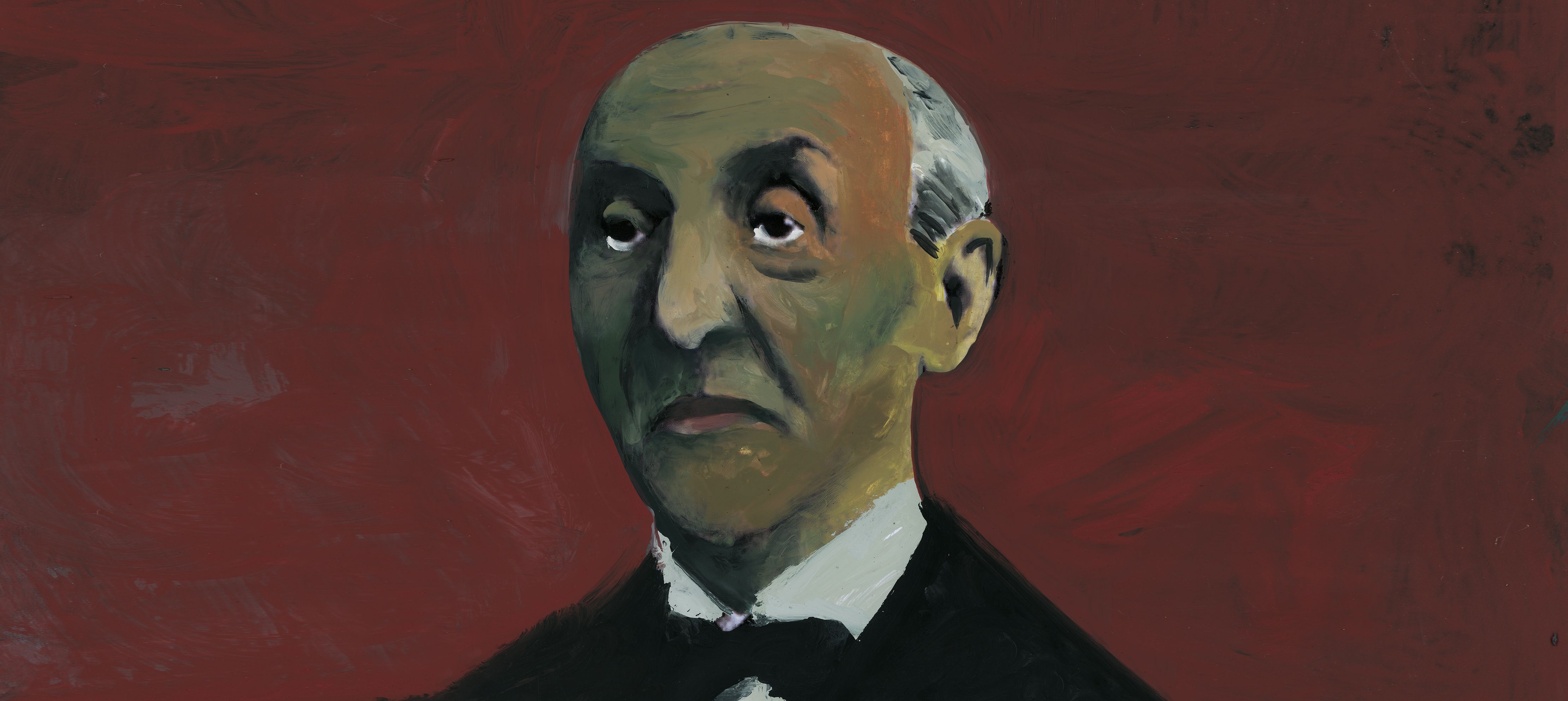
Thursday, May 28 at 8:00 PM, in the Mehta Hall of the Theatre, Maestro Philippe Jordan takes the podium conducting the Orchestra del Maggio.
The program features compositions by Ludwig van Beethoven and Anton Bruckner.
Joining him at the piano is Jan Lisiecki.
Illustration © Gianluigi Toccafondo
Florence, May 26, 2026 – Just a few days after the great success of the concerts conducted by Dmitry Sinkovski and Antonio Pappano, the Maggio’s Mehta Hall lights up once again for another symphonic event. On Thursday, May 28 at 8:00 PM, Maestro Philippe Jordan returns to the podium of the Orchestra del Maggio Musicale Fiorentino. Joining him at the piano is Jan Lisiecki, making his debut at the Maggio.
Philippe Jordan — who made his debut in the Maggio seasons during another symphonic concert in April 2021 - began his career at the age of 20 as Music Director at the Ulm Theatre. In 1998 he became assistant to Daniel Barenboim at the Berlin State Opera, where he also served as Principal Guest Conductor, and from 2001 to 2004 he was Chief Conductor of the Graz Opera and Philharmonic Orchestra. He later made his debuts at the Metropolitan Opera in New York, the Royal Opera House Covent Garden in London, Teatro alla Scala, the Bavarian State Opera, and the Vienna State Opera. From September 2020 to June 2025 he served as Music Director of the Vienna State Opera, where he led numerous important new productions including Madama Butterfly, Parsifal, Macbeth, Le nozze di Figaro, and Die Meistersinger von Nürnberg.
Jan Lisiecki has built a career spanning more than ten years on some of the world’s most prestigious stages. He is a regular guest at major summer festivals in Europe and North America, including the Salzburg Festival and, more recently, the BBC Proms. At just 15 years old, he was offered an exclusive recording contract with Deutsche Grammophon. Since then, he has recorded nine albums that have received awards including the JUNO Award, ECHO Klassik, Gramophone Critics’ Choice, Diapason d’Or, and Edison Klassiek. At only 18, he became the youngest artist in history to receive a Gramophone “Young Artist” Award, in addition to a Leonard Bernstein Award.
The concert opens with two works by Ludwig van Beethoven: Leonore, Overture Op. 72b, and Piano Concerto No. 3 in C minor, Op. 37.
Of the four overtures composed for Fidelio, Leonore No. 3, Op. 72b, is the most famous and represents the true musical summa of the drama. Beethoven composed it in 1806 for the opera’s second version; however, the overture’s expansive symphonic scope and unusually large dimensions led him, in 1814, during the preparation of the third and final version of Fidelio, to replace it with a new and shorter overture that was musically less demanding.
This is followed by Piano Concerto No. 3 in C minor for piano and orchestra, composed between 1800 and 1802. The concerto premiered in Vienna on April 5, 1803, with Beethoven himself as soloist.
The evening concludes with Anton Bruckner’s celebrated Symphony No. 4 in E-flat major, known as the “Romantic.” The descriptive title Romantic (Romantische) was added by the composer himself, who — although he never included them in the score — drafted a series of literary and historical-inspired captions: the awakening of a medieval city, morning trumpet calls, knights galloping, serenades, lively hunting scenes, and a noisy popular festival. The symphony was first performed on February 20, 1881, by Hans Richter conducting the Vienna Philharmonic.